Cashless Society
Under Obama FBI Now Captures Every Phone Call Made In the United States
May 6th
Obama demanded that all forms of digital communications allow the US government backdoor access to intercept them
The real capabilities and behavior of the US surveillance state are almost entirely unknown to the American public because, like most things of significance done by the US government, it operates behind an impenetrable wall of secrecy. But a seemingly spontaneous admission this week by a former FBI counterterrorism agent provides a rather startling acknowledgment of just how vast and invasive these surveillance activities are.

CLEMENTE: “No, welcome to America. All of that stuff is being captured as we speak whether we know it or like it or not.”
Over the past couple days, cable news tabloid shows such as CNN’s Out Front with Erin Burnett have been excitingly focused on the possible involvement in the Boston Marathon attack of Katherine Russell, the 24-year-old American widow of the deceased suspect, Tamerlan Tsarnaev. As part of their relentless stream of leaks uncritically disseminated by our Adversarial Press Corps, anonymous government officials are claiming that they are now focused on telephone calls between Russell and Tsarnaev that took place both before and after the attack to determine if she had prior knowledge of the plot or participated in any way.
On Wednesday night, Burnett interviewed Tim Clemente, a former FBI counterterrorism agent, about whether the FBI would be able to discover the contents of past telephone conversations between the two. He quite clearly insisted that they could:
BURNETT: Tim, is there any way, obviously, there is a voice mail they can try to get the phone companies to give that up at this point. It’s not a voice mail. It’s just a conversation. There’s no way they actually can find out what happened, right, unless she tells them?
CLEMENTE: “No, there is a way. We certainly have ways in national security investigations to find out exactly what was said in that conversation. It’s not necessarily something that the FBI is going to want to present in court, but it may help lead the investigation and/or lead to questioning of her. We certainly can find that out.
BURNETT: “So they can actually get that? People are saying, look, that is incredible.
CLEMENTE: “No, welcome to America. All of that stuff is being captured as we speak whether we know it or like it or not.”
“All of that stuff” – meaning every telephone conversation Americans have with one another on US soil, with or without a search warrant – “is being captured as we speak”.
On Thursday night, Clemente again appeared on CNN, this time with host Carol Costello, and she asked him about those remarks. He reiterated what he said the night before but added expressly that “all digital communications in the past” are recorded and stored:
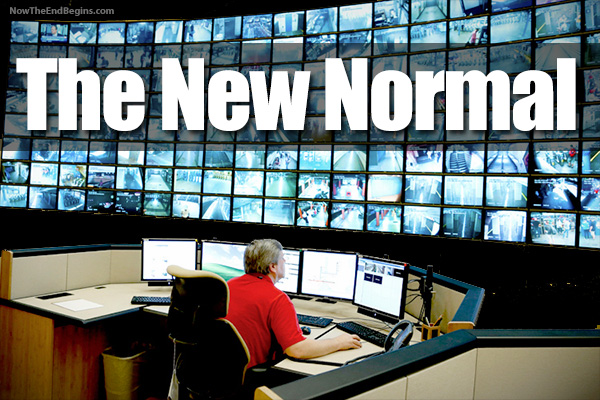
Let’s repeat that last part: “no digital communication is secure”, by which he means not that any communication is susceptible to government interception as it happens (although that is true), but far beyond that: all digital communications – meaning telephone calls, emails, online chats and the like – are automatically recorded and stored and accessible to the government after the fact. To describe that is to define what a ubiquitous, limitless Surveillance State is.
There have been some previous indications that this is true. Former AT&T engineer Mark Klein revealed that AT&T and other telecoms had built a special network that allowed the National Security Agency full and unfettered access to data about the telephone calls and the content of email communications for all of their customers. Specifically, Klein explained “that the NSA set up a system that vacuumed up Internet and phone-call data from ordinary Americans with the cooperation of AT&T” and that “contrary to the government’s depiction of its surveillance program as aimed at overseas terrorists . . . much of the data sent through AT&T to the NSA was purely domestic.” But his amazing revelations were mostly ignored and, when Congress retroactively immunized the nation’s telecom giants for their participation in the illegal Bush spying programs, Klein’s claims (by design) were prevented from being adjudicated in court.
That every single telephone call is recorded and stored would also explain this extraordinary revelation by the Washington Post in 2010:
Every day, collection systems at the National Security Agency intercept and store 1.7 billion e-mails, phone calls and other types of communications.
It would also help explain the revelations of former NSA official William Binney, who resigned from the agency in protest over its systemic spying on the domestic communications of US citizens, that the US government has “assembled on the order of 20 trillion transactions about US citizens with other US citizens” (which counts only communications transactions and not financial and other transactions), and that “the data that’s being assembled is about everybody. And from that data, then they can target anyone they want.”
Despite the extreme secrecy behind which these surveillance programs operate, there have been periodic reports of serious abuse. Two Democratic Senators, Ron Wyden and Mark Udall, have been warning for years that Americans would be “stunned” to learn what the US government is doing in terms of secret surveillance.
Strangely, back in 2002 – when hysteria over the 9/11 attacks (and thus acquiescence to government power) was at its peak – the Pentagon’s attempt to implement what it called the “Total Information Awareness” program (TIA) sparked so much public controversy that it had to be official scrapped. But it has been incrementally re-instituted – without the creepy (though honest) name and all-seeing-eye logo – with little controversy or even notice.
Back in 2010, worldwide controversy erupted when the governments of Saudi Arabia and the United Arab Emirates banned the use of Blackberries because some communications were inaccessible to government intelligence agencies, and that could not be tolerated. The Obama administration condemned this move on the ground that it threatened core freedoms, only to turn around six weeks later and demand that all forms of digital communications allow the US government backdoor access to intercept them. Put another way, the US government embraced exactly the same rationale invoked by the UAE and Saudi agencies: that no communications can be off limits. Indeed, the UAE, when responding to condemnations from the Obama administration, noted that it was simply doing exactly that which the US government does:
“‘In fact, the UAE is exercising its sovereign right and is asking for exactly the same regulatory compliance – and with the same principles of judicial and regulatory oversight – that Blackberry grants the US and other governments and nothing more,’ [UAE Ambassador to the US Yousef Al] Otaiba said. ‘Importantly, the UAE requires the same compliance as the US for the very same reasons: to protect national security and to assist in law enforcement.’”
That no human communications can be allowed to take place without the scrutinizing eye of the US government is indeed the animating principle of the US Surveillance State. Still, this revelation, made in passing on CNN, that every single telephone call made by and among Americans is recorded and stored is something which most people undoubtedly do not know, even if the small group of people who focus on surveillance issues believed it to be true (clearly, both Burnett and Costello were shocked to hear this).
Some new polling suggests that Americans, even after the Boston attack, are growing increasingly concerned about erosions of civil liberties in the name of Terrorism. Even those people who claim it does not matter instinctively understand the value of personal privacy: they put locks on their bedroom doors and vigilantly safeguard their email passwords. That’s why the US government so desperately maintains a wall of secrecy around their surveillance capabilities: because they fear that people will find their behavior unacceptably intrusive and threatening, as they did even back in 2002 when John Poindexter’s TIA was unveiled.
Mass surveillance is the hallmark of a tyrannical political culture. But whatever one’s views on that, the more that is known about what the US government and its surveillance agencies are doing, the better. This admission by this former FBI agent on CNN gives a very good sense for just how limitless these activities are. source – Guardian UK
Apple To Roll Out Hyper-Invasive Indoor Tracking Technology
Mar 25th
The 666 Surveillance System
For many years now, NTEB has been telling you of the coming worldwide tracking system that, one day, will be connected to the Antichrist and the Mark of the Beast. We call it the 666 Surveillance System. Please keep that in mind as your read the story below…
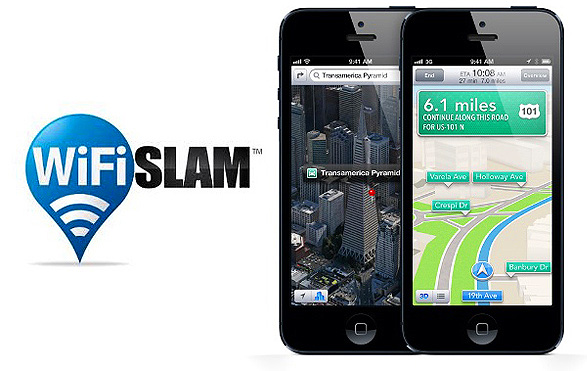
From Fox News: Apple is looking to beef up the iPhone’s indoor location capabilities by acquiring WiFiSlam. According to The Wall Street Journal, which first reported the deal, Apple paid $20 million to scoop up the two-year-old startup based in Silicon Valley.
The next time you update your iPhone software, Apple will be able to track you down to the exact corner of the room you are in. Now why would they need to know that? Hmmm….
Using Wi-Fi signals, WiFiSlam determines a user’s location within buildings, which has implications for shopping, advertising and social networking. According to WiFiSlam, its technology can pinpoint a smartphone with 2.5 accuracy.
“We are building the next generation of location-based mobile apps that, for the first time, engage with users at the scale that personal interaction actually takes place,” a description reads on AngelList’s investment page for WiFiSlam. “Applications range from step-by-step indoor navigation, to product-level retail customer engagement, to proximity-based social networking.”
Perhaps WiFiSlam’s technology could help Apple not only makes its iAd platform more robust by delivering location-based offers but enhance the accuracy of its Passbook service. We’ve received lock screen notifications for Walgreens while we were a quarter of a mile away.
Apple gets some Google juice out of the deal, too. WiFiSlam’s co-founder, Joseph Huang, is a former Google software engineering intern. And one of the company’s angel investors was a Google employee. source – Fox News
Biocryptology Is The Future Of Cashless Transactions
Feb 25th
RELATED STORY: The Mark of the Beast
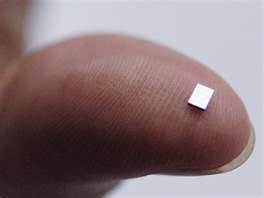
RAPID CITY, S.D. — Futurists have long proclaimed the coming of a cashless society, where dollar bills and plastic cards are replaced by fingerprint and retina scanners smart enough to distinguish a living, breathing account holder from an identity thief.
What they probably didn’t see coming was that one such technology would make its debut not in Silicon Valley or MIT but at a small state college in remote western South Dakota, 25 miles from Mount Rushmore.
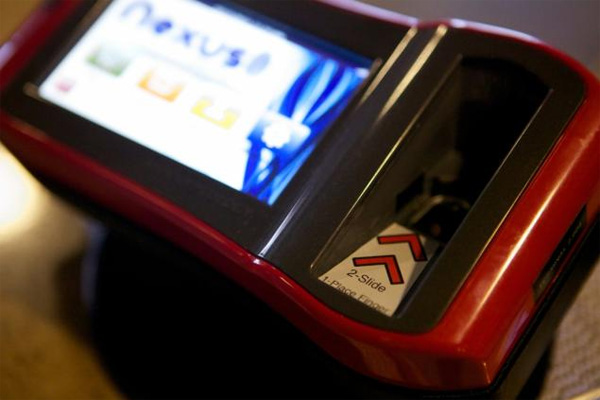
Two shops on the School of Mines and Technology campus are performing one of the world’s first experiments in Biocryptology — a mix of biometrics (using physical traits for identification) and cryptology (the study of encoding private information). Students at the Rapid City school can buy a bag of potato chips with a machine that non-intrusively detects their hemoglobin to make sure the transaction is legitimate.
Researchers figure their technology would provide a critical safeguard against a morbid scenario sometimes found in spy movies in which a thief removes someone else’s finger to fool the scanner.
On a recent Friday, mechanical engineering major Bernard Keeler handed a Red Bull to a cashier in the Miner’s Shack campus shop, typed his birthdate into a pay pad and swiped his finger. Within seconds, the machine had identified his print and checked that blood was pulsing beneath it, allowing him to make the buy. Afterward, Keeler proudly showed off the receipt he was sent via email on his smartphone.
Fingerprint technology isn’t new, nor is the general concept of using biometrics as a way to pay for goods. But it’s the extra layer of protection — that deeper check to ensure the finger has a pulse — that researchers say sets this technology apart from already-existing digital fingerprint scans, which are used mostly for criminal background checks.
Al Maas, president of Nexus USA — a subsidiary of Spanish-based Hanscan Indentity Management, which patented the technology — acknowledged South Dakota might seem an unlikely locale to test it, but to him, it was a perfect fit.
“I said, if it flies here in the conservative Midwest, it’s going to go anywhere,” Maas said.
Maas grew up near Madison, S.D., and wanted his home state to be the technology’s guinea pig. He convinced Hanscan owner Klaas Zwart that the 2,400-student Mines campus should be used as the starter location.
The students all major in mechanical engineering or hard sciences, which means they’re naturally technologically inclined, said Joseph Wright, the school’s associate vice president for research-economic development.
“South Dakota is a place where people take risks. We’re very entrepreneurial,” Wright said. After Maas and Zwart introduced the idea to students this winter, about 50 stepped forward to take part in the pilot.
“I really wanted to be part of what’s new and see if I could help improve what they already have,” said Phillip Clemen, 19, a mechanical engineering student.
Robert Siciliano, a security expert with McAfee, Inc., minimized potential privacy concerns. ”We are hell bent on privacy issues here in the U.S. We get all up in arms when someone talks about scanning us or recording our information, but then we’ll throw up everything about us on Facebook and give up all of our personal information for 10 percent off at a shoe store for instant credit,” he said.
Jay Stanley, senior policy analyst with the American Civil Liberties Union, said fingerprint technology on its own raises security issues, but he called “liveness detection” a step in the right direction.
“Any security measure can be defeated; it’s a question of making it harder,” he said. The key to keeping biometric identification from becoming Big Brother-like is to make it voluntary and ensure that the information scanned is used exactly as promised, Stanley said.
Brian Wiles, a Miles mechanical engineering major, said it’s exciting to be beta testing technology that could soon be worldwide. ”There was some hesitation, but the fact that it’s the first in the world — that’s the whole point of this school,” said Wiles, 22. “We’re innovators.” source – NY Daily News
Use of RFID Tracking Technology To Be Mandatory In US Food Stamp Program
May 31st
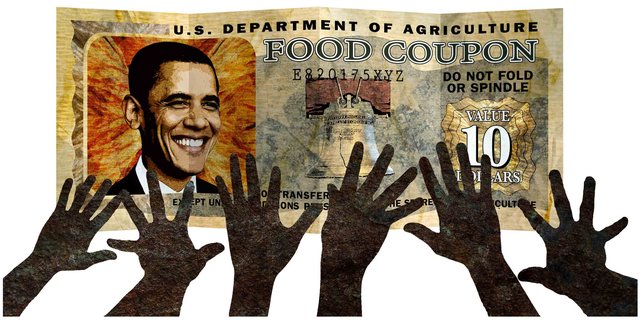
Food stamp welfare individuals must soon be chipped
“And he causeth all, both small and great, rich and poor, free and bond, to receive a mark in their right hand, or in their foreheads: And that no man might buy or sell, save he that had the mark, or the name of the beast, or the number of his name.” (Revelation 13:16-17)
In a little while, the above scene in Revelation 13 will become a global reality. People can no longer buy or sell without the mark of the beast. And sometimes that would mean no longer being able to eat!
The USDA is now considering biometric identification for all individuals who will want to benefit from their Food and Nutrition Services. The RFID chip may just soon be a must for everyone who does not want to starve!
The following is an excerpt of the executive summary of the FINAL REPORT of the Use of Biometric Identification Technology to Reduce Fraud in the Food Stamp Program:
Biometric identification technology provides automated methods to identify a person based on physical characteristics—such as fingerprints, hand shape, and characteristics of the eyes and face—as well as behavioral characteristics—including signatures and voice patterns.

Although used in law enforcement and defense for several years, it has recently been used in civilian applications and shows some promise to reduce the number of duplicate cases in the Food Stamp Program (FSP) and other assistance programs .
Already operational in some states
Biometric identification systems are currently operational at some level in Arizona, California (under county initiative, first by Los Angeles County), Connecticut, Illinois, Massachusetts, New Jersey, New York, and Texas. Finger imaging is the principal form of technology used in all eight States, though alternative technologies have simultaneously undergone trials in Massachusetts (facial recognition) and Illinois (retinal scanning). By the end of 2000, new systems are expected to be in place in California (statewide unified system), Delaware, and North Carolina. Other States are currently in the initial planning stages, including Florida, Maryland, Michigan, Mississippi, Pennsylvania, and South Carolina. However, there is little information available at this point regarding the specific course and trajectory these States will follow in terms of system types, implementation schedules, and the benefit programs in which they will implement the new requirement.
The States planned for implementation of their biometric identification systems in response to a wide variety of factors and considerations idiosyncratic to each State environment. Some States reported that their respective legislative mandates, which prescribed specific dates by which biometric systems were required to be in place, allowed insufficient time for development and planning. The States developed and followed implementation schedules in accordance with internal priorities and considerations. The States uniformly described their implementation processes as largely uneventful, though they encountered a variety of minor implementation issues, most of which were associated with the logistical difficulties of mobilizing and managing such a complex initiative.
Preparing staff for the implementation of the biometric systems, both philosophically and operationally, took different forms, priorities, and levels of effort in the States. At implementation, advance notification to clients and/or the general public about new biometric client identification procedures was considered important by all State representatives. The objective of providing advance notification was to inform and prepare clients for the additional application or recertification step (i.e., to explain the requirement and who is required to submit, and to address client concerns), as well as to accelerate enrollment of the existing caseload. All States prepared informational mailings to clients advising them of the new requirement. Some States reported developing additional outreach media including multilingual (English and Spanish) videos, posters, and brochures for viewing and distribution in the local office. Most of the States also identified various outlets in the community through which they informed the general public in advance about the implementation of biometric client identification procedures.
Program outcomes
The evaluations of finger imaging systems conducted by six States have produced the following findings.
- A small number of duplicate applications (approximately 1 duplicate for every 5,000 cases) have been detected by finger imaging systems. Finger-imaging systems appear to detect more fraud in statewide implementations than in regional pilot systems. Additional matches have been found by interstate comparisons of finger-image data.
- Institution of a finger-imaging requirement can produce a significant, short-term reduction in caseload, because some existing clients refuse to comply with the requirement. The number of refusals depends on the implementation procedures and appears to be lower when finger imaging is incorporated into the recertification process.
- The most carefully controlled estimate of non-compliance among existing clients suggests that introduction of a finger-imaging requirement reduces participation by approximately 1.3%. However, this estimate reflects both reduced fraud and deterrence of eligible individuals and households.
Source – USDA
Additional information from the USDA Nutrition Assistance Program
Most Americans Will Use Smart Phones Not Cash For Payments By 2020
Apr 17th
The coming cashless society
Related Story: The Mark of the Beast
Take a look at the green stuff in your wallet (if you have any) and prepare to say goodbye to it in the future: By 2020, most Americans will be using their cellphones, not cash or credit cards, to make payments.
That’s what 65 percent of the 1,021 tech experts surveyed by Pew Research Center’s Internet & American Life Project and the Imagining the Internet Center at Elon University said is likely to be the case, with consumers not only adopting, but embracing, the use of “smart-device swiping” for purchases.
“So many people are already accustomed to buying a cup of coffee with a credit card that smart-device swiping is only a very small next step,” John Pike, director of GlobalSecurity.org, told Pew in its report, “The Future of Money in a Mobile Age.”
Already, many of us are using our smartphones to pay for a variety of goods and services, including renting movies via iTunes or Netflix, or buying e-books from Amazon. More than one third of smartphone owners have used their phones to check their bank balance or to pay a bill, according to Pew.
A Federal Reserve report in March found that 21 percent of cellphone owners used mobile banking services in the previous year, and another 11 percent plan to do so in the next 12 months, Pew said. Among those users, 12 percent said they’ve used their phone to access their bank account to pay bills or transfer money to another person’s account.
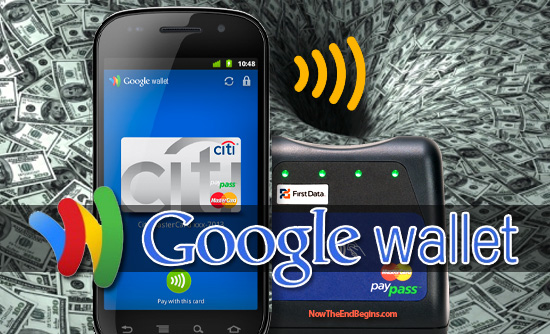
Mobile payment technologies are in the early stages in the U.S. among manufacturers: Google is among those leading the way with its Google Wallet partnership with Citibank and MasterCard, using near-field communication. The technology allows for very short-range communication between devices, such as a phone and a payment terminal. Google Wallet has only been available in the U.S. on the Nexus S phone, which has a built-NFC chip.
Wireless carriers Verizon, AT&T and T-Mobile have joined with credit card companies American Express, MasterCard and Discover, to develop a similar NFC program called “ISIS” that will be tested in pilot cities around the country mid-year. Google chief economist Hal Varian told Pew that while the year 2020 might be “a bit optimistic” for majority adoption of pay-via-phone, he’s sure it will happen.
“What is in your wallet now? Identification, payment, and personal items. All this will easily fit in your mobile device and will inevitably do so.”
Security remains a key issue for users. In one example so far, Google Wallet was recently cited by a security firm for a flaw that let the firm crack Google Wallet’s PIN code. Google contended that firm “disabled the security mechanisms that protect Google Wallet by rooting the device. To date, there is no known vulnerability that enables someone to take a consumer phone and gain root access while preserving any Wallet information such as the PIN.”
Pew noted that “in addition to potential concerns about the security and privacy of mobile payments and cloud storage of financial information, wide-scale usage of mobile payments may be slowed by the simple desire for anonymity” that the use of cash offers. And, as one anonymous respondent told Pew, cash may still remain king for many, because in a world of mobile payments, ” … if you run out of batteries, you temporarily run out of money.” source – MSNBC Technolog
Broadcom Unveils A New Microchip That Knows EXACTLY Where You Are
Apr 10th
Fulfilling the prophetic word
“And he causeth all, both small and great, rich and poor, free and bond, to receive a mark in their right hand, or in their foreheads: And that no man might buy or sell, save he that had the mark, or the name of the beast, or the number of his name.” Revelation 13:16,17
RELATED STORY: The Mark of the Beast
The day is here where technology exists that will help fulfill the prophecies of the book of Revelation from the holy bible. This is something that no generation in world history has ever been able to say. YOU are living in the time of the end…are you ready for what comes next?
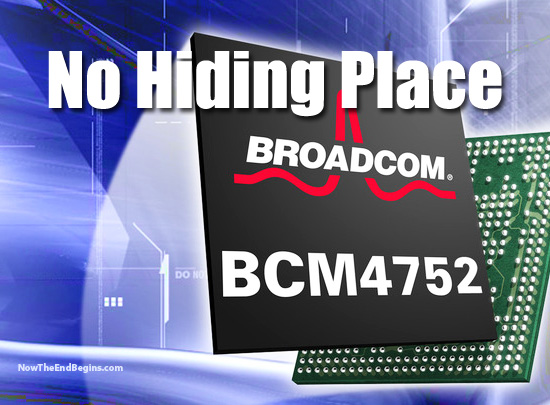
From Technology Review: Broadcom has just rolled out a chip for smart phones that promises to indicate location ultra-precisely, possibly within a few centimeters, vertically and horizontally, indoors and out.
The unprecedented accuracy of the Broadcom 4752 chip results from the sheer breadth of sensors from which it can process information. It can receive signals from global navigation satellites, cell-phone towers, and Wi-Fi hot spots, and also input from gyroscopes, accelerometers, step counters, and altimeters. (NOTE: The Broadcom 4752 chip. When you add 4+7+5+2 you get 18. 18 divided is 6+6+6. Just saying…)
The variety of location data available to mobile-device makers means that in our increasingly radio-frequency-dense world, location services will continue to become more refined.
In theory, the new chip can even determine what floor of a building you’re on, thanks to its ability to integrate information from the atmospheric pressure sensor on many models of Android phones. The company calls abilities like this “ubiquitous navigation,” and the idea is that it will enable a new kind of e-commerce predicated on the fact that shopkeepers will know the moment you walk by their front door, or when you are looking at a particular product, and can offer you coupons at that instant.
The integration of new kinds of location data opens up the possibility of navigating indoors, where GPS signals are weak or nonexistent.
Broadcom is already the largest provider of GPS chips to smart-phone makers. Its new integrated circuit relies on sensors that aren’t present in every new smart phone, so it won’t perform the same in all devices. The new chip, like a number of existing ones, has the ability to triangulate using Wi-Fi hot spots. Broadcom maintains a database of these hot spots for client use, but it says most of its clients maintain their own.
A company that pioneered the construction and maintenance of these kinds of Wi-Fi hot spot databases is SkyHook Wireless. Skyhook CEO Ted Morgan is skeptical that Broadcom can catch up to his company’s software-based system allowing for precise indoor location. “Broadcom is just now talking about something we have been doing for seven to eight years, uncovering all the challenges,” says Morgan. These include battery management and cataloging a new wave of mobile Wi-Fi hot spots. “Broadcom has never done major deployment,” adds Morgan.
Scott Pomerantz, vice president of the GPS division at Broadcom, counters that “the big [mobile] operating systems all have a strategy in place” to create their own Wi-Fi databases. Pomerantz isn’t allowed to name names, but one of Broadcom’s biggest customers is Apple, which previously used Skyhook for location services in its iPhone but now employs its own, Apple-built location system.
At least one feature of Broadcom’s new GPS chip is entirely forward-looking, and integrates data from a source that is not yet commercially deployed: Bluetooth beacons. (Bluetooth is the wireless standard used for short-range communications in devices like wireless keyboards and phone headsets.)
“The use case [for Bluetooth beacons] might be malls,” says Pomerantz. “It would be a good investment for a mall to put up a deployment—perhaps put them up every 100 yards, and then unlock the ability for people walking around mall to get very precise couponing information.”
“The density of these sensors will give you even finer location,” says Charlie Abraham, vice president of engineering at Broadcom. “It could show you where the bananas are within a store—even on which shelf there’s a specific brand.” source – Technology Review
As World Continues Move To Becoming Cashless Canada Discontinues Using The Penny
Mar 30th
RELATED STORY: Bible Prophecy In The News As Sweden Moves To Be World’s First Cashless Country
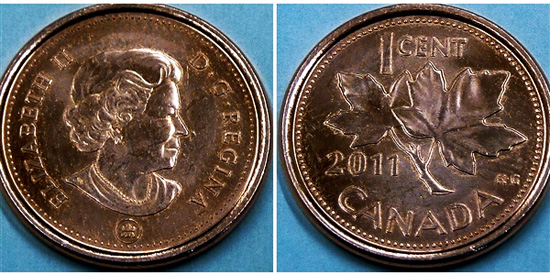
The Canadians are doing what the U.S. has not been able to accomplish: Eliminating the money-losing penny. The Canadian government has announced that it will stop distributing the Canadian penny beginning in the fall, with the gradual goal of removing it from circulation.
The move, unveiled as part of the Canadian government’s overall budget proposal, comes down to cold, hard cash. That is, the cash that can be saved by removing the penny from circulation.
The government said it expects it can save about $11 million Canadian dollars (about $11 million USD) a year by not supplying the penny, because the cost to produce a penny is more than the penny’s face value.
The Canadian government said in a release that, by contrast, the other coins it makes are worth more than the cost of production.
The government said people can continue to use pennies for as long as they want, and non-cash transactions will still go to the penny. But as they gradually are removed from circulation, people should begin rounding to the nearest denomination. The government laid out ways to do that.
The United States is in the same situation when it comes to coin making, but we have yet to eliminate any of our beloved coins.
It takes about 2.4 cents to make a U.S. penny, and a whopping 11.18 cents to make a nickel. That’s why the U.S. Treasury secretary has proposed cheaper manufacturing and administrative methods aimed at reducing production costs.
The Canadians said they are joining the ranks of other countries that have removed their lowest-denomination coin from circulation, including Australia, Norway, Switzerland and the United Kingdom. source – MSNBC