Posts tagged internet
United Nations Plan To Seize Control Of The Internet
Nov 26th
They will not stop till they do it
Next week the United Nations’ International Telecommunications Union will meet in Dubai to figure out how to control the Internet. Representatives from 193 nations will attend the nearly two week long meeting, according to news reports.
“Next week the ITU holds a negotiating conference in Dubai, and past months have brought many leaks of proposals for a new treaty. U.S. congressional resolutions and much of the commentary, including in this column, have focused on proposals by authoritarian governments to censor the Internet. Just as objectionable are proposals that ignore how the Internet works, threatening its smooth and open operations,” reports the Wall Street Journal.
“Having the Internet rewired by bureaucrats would be like handing a Stradivarius to a gorilla. The Internet is made up of 40,000 networks that interconnect among 425,000 global routes, cheaply and efficiently delivering messages and other digital content among more than two billion people around the world, with some 500,000 new users a day. …
”Proposals for the new ITU treaty run to more than 200 pages. One idea is to apply the ITU’s long-distance telephone rules to the Internet by creating a ‘sender-party-pays’ rule. International phone calls include a fee from the originating country to the local phone company at the receiving end. Under a sender-pays approach, U.S.-based websites would pay a local network for each visitor from overseas, effectively taxing firms such as Google and Facebook. The idea is technically impractical because unlike phone networks, the Internet doesn’t recognize national borders. But authoritarians are pushing the tax, hoping their citizens will be cut off from U.S. websites that decide foreign visitors are too expensive to serve.”
Even Google has already come out against the ITU
“The ITU is the wrong place to make decisions about the future of the Internet,” says Google. “Only governments have a voice at the ITU. This includes governments that do not support a free and open Internet. Engineers, companies, and people that build and use the web have no vote.”
“The ITU is also secretive. The treaty conference and proposals are confidential,” adds Google. source – Weekly Standard
Obama Preparing To Seize The Internet By Executive Order
Aug 6th
Senate Republicans recently blocked cybersecurity legislation, but the issue might not be dead after all. The White House hasn’t ruled out issuing an executive order to strengthen the nation’s defenses against cyber attacks if Congress refuses to act.

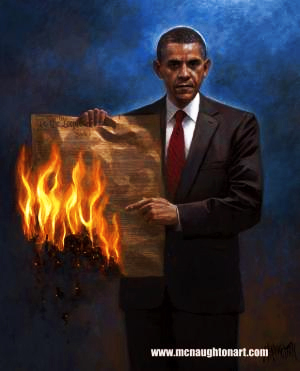
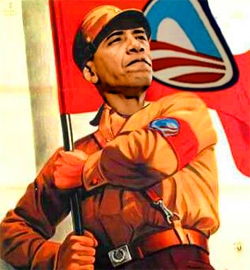
The Controversial Painting ‘One Nation Under Socialism’ (Photo Credit: John McNaughton / http://McNaughtonArt.com)
“In the wake of Congressional inaction and Republican stall tactics, unfortunately, we will continue to be hamstrung by outdated and inadequate statutory authorities that the legislation would have fixed,” White House Press Secretary Jay Carney said in an emailed response to whether the president is considering a cybersecurity order.
“Moving forward, the President is determined to do absolutely everything we can to better protect our nation against today’s cyber threats and we will do that,” Carney said.
The White House has emphasized that better protecting vital computer systems is a top priority.
The administration proposed its own legislation package in 2011, sent officials to testify at 17 congressional hearings and presented more than 100 briefings on the issue. In a recent Wall Street Journal op-ed, President Obama warned that a successful cyber attack on a bank, water system, electrical grid or hospital could have devastating consequences.
The president urged Congress to pass the Cybersecurity Act, which was offered by Sens. Joe Lieberman (I-Conn.) and Susan Collins (R-Maine). The bill would have encouraged private companies and the government to share information about cyber threats and would have required critical infrastructure operators to meet minimum cybersecurity standards.
But Senate Republicans, led by Sen. John McCain (R-Ariz.), worried the bill would burden businesses with unnecessary and ineffective regulations.
The bill’s sponsors watered down the regulatory provisions, replacing the security mandates with voluntary incentives, but that wasn’t enough to win over Republicans. The bill mustered 52 votes in the Senate, well short of the 60 needed to overcome a filibuster.
If Obama issues an order on cybersecurity, it wouldn’t be the first time that his administration has resorted to executive action to bypass Congress.
Obama uses the slogan “we can’t wait” to argue that some issues are too important to be allowed to stall in Congress.
When lawmakers refused to pass the Dream Act to give legal status to students brought to the country illegally, the administration announced that it would stop deporting young immigrants who would have been eligible to stay under the bill.
Jim Lewis, a senior fellow at the Center for Strategic and International Studies, explained that Obama could enact many of the core provisions of the Cybersecurity Act through executive order.
Many companies managing vital computer systems are already heavily regulated. Lewis said the president could order agencies to require the industries they regulate to meet cybersecurity standards.
“You don’t need new legislative authority to do that,” Lewis said.
He noted that some regulatory agencies, including the Federal Communications Commission and the Nuclear Regulatory Commission, are independent and not bound to follow executive orders. But Lewis predicted that even the independent agencies would likely enforce an executive order on cybersecurity.
Lewis said the Office of Management and Budget is already working on security standards for federal computer systems, and said those guidelines could form the basis of standards for the private sector.
Lewis acknowledged that the provisions of the Cybersecurity Act that would have torn down legal barriers to information-sharing would have to be enacted by Congress. Although those provisions were the ones most strongly supported by the business community, Lewis expressed skepticism that they would do much to improve cybersecurity anyway.
“You can have them or don’t have them. Who cares,” he said.
But Lewis said that an executive order could even partially address information-sharing. The FCC, for example, has set up a voluntary system for companies to share information about cyber threats with each other, he said.
An executive order may accomplish many of the goals of the Cybersecurity Act, but it could also further raise the ire of Republicans and the business groups, such as the U.S. Chamber of Commerce, who lobbied against the legislation.
Republicans have already accused President Obama of making illegal power grabs with his previous executive actions, and a cybersecurity order would likely elicit similar howls of disapproval.
Although Sen. Collins was frustrated by the defeat of her bill, she reacted coolly to the idea of the president bypassing Congress.
“I’m not for doing by executive order what should be done by legislation,” she said.
Sen. Dianne Feinstein (D-Calif.), one of the main co-sponsors of the Cybersecurity Act, said she prefers that Congress address the problem, but she is open to presidential action if Congress fails.
“I suppose if we can’t, the answer would be yes,” she said when asked whether she would support an executive order. source – The Hill
US Remains Silent As United Nations Works To Place Internet Under ‘International Control’
Feb 21st
UN seeks to silence the Internet
Like most people, it is likely that you have never heard of the ITU before now. So please allow us to get you up to speed. The ITU, or International Telecommunication Union, is a treaty-based organization under the direct control of the United Nations. As you will see in this WSJ article, there is a major push on right now to wreste control on the Internet from it’s current public domain, and place it under “international control” (read ‘censorship’). This current assualt starts February 27th, 6 days from today.
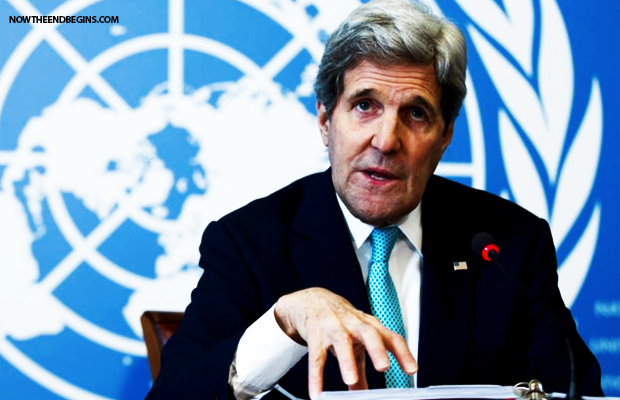
From WSJ: On Feb. 27, a diplomatic process will begin in Geneva that could result in a new treaty giving the United Nations unprecedented powers over the Internet. Dozens of countries, including Russia and China, are pushing hard to reach this goal by year’s end. As Russian Prime Minister Vladimir Putin said last June, his goal and that of his allies is to establish “international control over the Internet” through the International Telecommunication Union (ITU), a treaty-based organization under U.N. auspices.

The International Telecommunication Union (ITU), is a treaty-based organization under U.N. auspices.
If successful, these new regulatory proposals would upend the Internet’s flourishing regime, which has been in place since 1988. That year, delegates from 114 countries gathered in Australia to agree to a treaty that set the stage for dramatic liberalization of international telecommunications. This insulated the Internet from economic and technical regulation and quickly became the greatest deregulatory success story of all time.
Russia, China and their allies within the 193 member states of the ITU want to renegotiate the 1988 treaty to expand its reach into previously unregulated areas. Reading even a partial list of proposals that could be codified into international law next December at a conference in Dubai is chilling:
• Subject cyber security and data privacy to international control;
• Allow foreign phone companies to charge fees for “international” Internet traffic, perhaps even on a “per-click” basis for certain Web destinations, with the goal of generating revenue for state-owned phone companies and government treasuries;
• Impose unprecedented economic regulations such as mandates for rates, terms and conditions for currently unregulated traffic-swapping agreements known as “peering.”
• Establish for the first time ITU dominion over important functions of multi-stakeholder Internet governance entities such as the Internet Corporation for Assigned Names and Numbers, the nonprofit entity that coordinates the .com and .org Web addresses of the world;
• Subsume under intergovernmental control many functions of the Internet Engineering Task Force, the Internet Society and other multi-stakeholder groups that establish the engineering and technical standards that allow the Internet to work;
• Regulate international mobile roaming rates and practices.
While precious time ticks away, the U.S. has not named a leader for the treaty negotiation. We must awake from our slumber and engage before it is too late. Not only do these developments have the potential to affect the daily lives of all Americans, they also threaten freedom and prosperity across the globe. source – Wall Street Journal
The Coming War by the Obama Administration Against Bloggers
May 28th
You may not have noticed but over the past few months there have been a number of articles about the US government cracking down on “internet piracy”. Now by “piracy” they immediately are referring to stolen or counterfeit goods like sports memorabilia, designer watches, etc. Then after they floated that trial balloon, we read today in the article quoted below that that will now extended to “downloadable content” that you did not create or purchase yourself such as songs, videos and movies. But let me tell you, and you will not read this anywhere else, who the real target of the Obama administration is – web bloggers and people who repost story content.
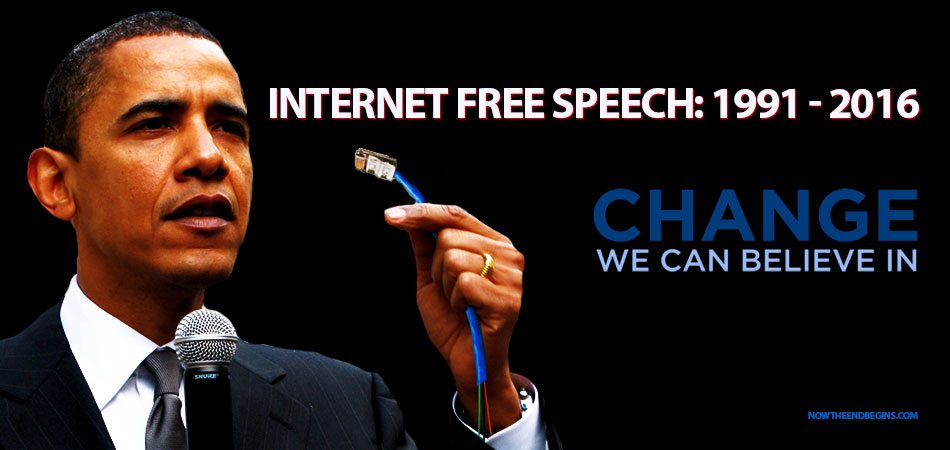
Obama knows that in our social-obsessed society that if he cannot control the Internet, and what’s posted on there, then ultimately he cannot control his message. One of the most rapid means of information transfer in the world today is people who write for blogs and post on Facebook and Twitter. The entire Egyptian revolution by the Muslim Brotherhood was waged first on Facebook. So we will predict that the real intent of Obama’s crackdown on piracy is actually a veiled attempt to stop the flow of news and other information. But you have to start somewhere, right? And someday very soon, the act of reposting the story below taken from MSNBC, will be branded a crime by Obama. Obama is creating a “yellow star” shadow government, and it seems that there is little that can be done to stop him, other than to post and repost stories like this one.
“Amid growing calls for more government regulation of the Internet, the United States is conducting what it calls “a sustained law enforcement initiative aimed at counterfeiting and piracy” – an effort that already has resulted in arrests and the seizure of 125 websites. Ask anybody who uses a computer if they’ve ever downloaded or streamed media content for free on the Internet, and the answer most likely will be yes. The U.S. government and the American media industry say as much as a quarter of this kind of media traffic violates U.S. copyright law, and both are getting serious in their attempts to turn off the spigot.
The government and the media industry say U.S. copyright law (specifically, 18 USC 2319), states that distributing such content without permission from the copyright holder is a crime – copyright infringement. They generally use a simpler name: theft – of intellectual property, or “IP theft” for short.
The most recent skirmish in the escalating conflict occurred this week, when the U.S. Immigration and Customs Enforcement agency (ICE) announced that its Homeland Security Investigations unit had seized the domain names of five websites that it said were being used to sell counterfeit goods or illegally distribute copyrighted materials, including media content.
If convicted, the banner warns, even first-time offenders “will face up to five years in federal prison,” plus “restitution, forfeiture and fine.”
The crackdown – dubbed “Operation In Our Sites” – is being spearheaded by ICE’s National Intellectual Property Rights Coordination Center, working in coordination with U.S. attorneys’ offices across the country. The initiative has so far seized the domain names of 125 websites since it began last year, ICE says, effectively shutting them down.” source – MSNBC