Middle East
Blasts And Anti-aircraft Fire Rock Gaddafi Tripoli Compound
Loud explosions and barrages of anti-aircraft fire were heard near the Tripoli compound of Libyan strongman Muammar Gaddafi on Monday night, an AFP correspondent says. The volleys erupted about 7.00pm GMT (6.00am AEDT) near the Bab el-Aziziya barracks in the south of Tripoli, the correspondent said. Libyan state television confirmed what it called the “crusader enemy” attacks. “These attacks are not going to scare the Libyan people,” the TV broadcast said.

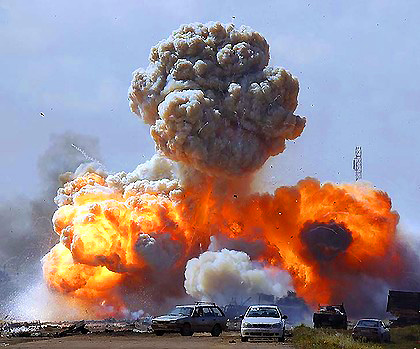
Bombs aweigh
Loud explosions and barrages of anti-aircraft fire were heard near the Tripoli compound of Libyan strongman Muammar Gaddafi on Monday night, an AFP correspondent says.
Air strike ... pro-Gaddafi troops are bombed by coalition forces on the road between Benghazi and Ajdabiya. Photo: Reuters
Loud explosions and barrages of anti-aircraft fire were heard near the Tripoli compound of Libyan strongman Muammar Gaddafi on Monday night, an AFP correspondent says. The volleys erupted about 7.00pm GMT (6.00am AEDT) near the Bab el-Aziziya barracks in the south of Tripoli, the correspondent said. Libyan state television confirmed what it called the “crusader enemy” attacks. “These attacks are not going to scare the Libyan people,” the TV broadcast said.
Similar explosions rocked the capital on Sunday night, with coalition officials on Monday saying an administrative building in Gaddafi’s fortified complex, about 50 metres from the tent where he generally meets guests, had been destroyed by a cruise missile. Britain, France and the US began launching strikes with aircraft and cruise missiles on targets in Libya late on Saturday in line with a UN Security Council resolution authorising any measures to stop Kadhafi harming civilians in a campaign by his forces to subdue an uprising.
US President Barack Obama said on Monday that Gaddafi must leave power, but stressed the United States would stick to the UN mandate in its military action in Libya. “Our military action is in support of an international mandate from the Security Council that specifically focuses on the humanitarian threat posed by Colonel Gaddafi to his people,” Obama told a press conference. Obama said as part of the international coalition now enforcing a no-fly zone in Libya, he had “authorised the United States military to work with our international partners to fulfill that mandate”. “Now, I also have stated that it is US policy that Gaddafi needs to go,” Obama added after talks in Santiago with Chilean President Sebastian Pinera.” source – The Age












Headline News
Iran Just Launched The Persian Gulf Strait Authority Claiming That Over 300 Non-Iranian Ships Have Signed On To New Hormuz Toll System In Defiance Of US
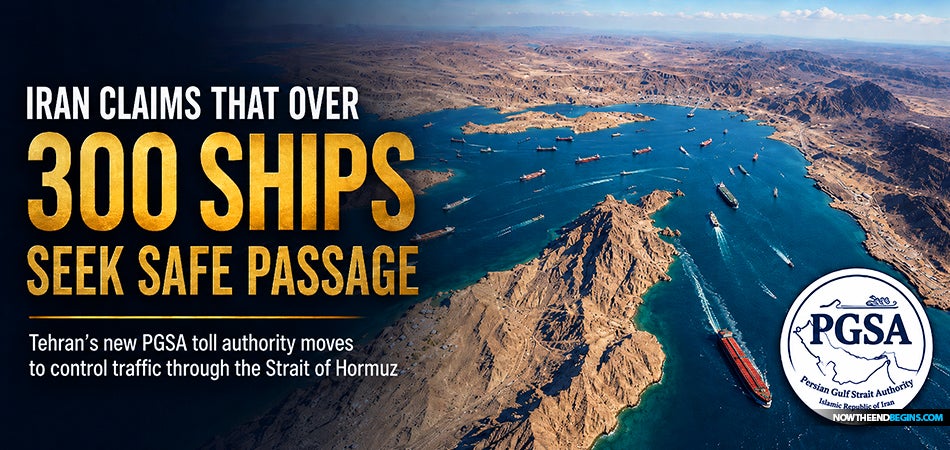
Iran Claims That Over 300 Ships Have Applied For Safe Passage Through The Strait Of Hormuz As Tehran’s New PGSA Toll Authority Moves To Control One Of The World’s Most Critical Oil Chokepoints
Well, well, well. Just when you were told that Iran had been “obliterated,” “decimated,” and reduced to rubble, here comes Tehran rolling out a brand-new maritime shakedown operation at one of the most important oil chokepoints on the face of the earth. As it turns out, the Iranian Regime that Donald Trump and Pete Hegseth once said must be removed have launched a new business venture netting them millions per month. I guess no one bothered to inform Iran how defeated they are. But I digress.
“For in one hour so great riches is come to nought. And every shipmaster, and all the company in ships, and sailors, and as many as trade by sea, stood afar off,” Revelation 18:17 (KJB)
Iran has created something called the Persian Gulf Strait Authority, or PGSA, and according to reports coming out of Tehran, more than 300 non-Iranian ships have already applied for safe passage through the Strait of Hormuz. Most of those ships are said to be oil tankers, and the bulk of them are trying to get out of the Persian Gulf and head east to Asia, especially China and India. In other words, this is not a symbolic move, this is not a paper tiger, and this is not the activity of a nation lying helpless in the dust. This is a calculated attempt by Iran to turn the world’s most explosive maritime chokepoint into a permanent toll booth.
The Strait of Hormuz is not just another body of water. It is the narrow Persian Gulf passageway through which a massive portion of the world’s seaborne oil trade flows. When Hormuz sneezes, the global energy markets catch pneumonia. Every president, king, crown prince, oil trader, shipping company, insurance firm, and military planner knows it. Iran knows it, too. That is why Tehran has now moved from merely threatening the Strait to attempting to regulate it, monetize it, and weaponize it under the color of a new “authority.”
The Persian Gulf Strait Authority (PGSA) said the majority of the ships applying were oil tankers, with at least 77% of the applicants looking to exit the Persian Gulf to reach Asia, particularly China and India, two of the Middle East’s largest fuel buyers. source
The official line from Washington is that this is extortion, and for once Washington is right. The U.S. Treasury sanctioned the PGSA, identifying it as tied to the Islamic Revolutionary Guard Corps, and warned companies against doing business with it. But the deeper issue is this: if Iran is so destroyed, why does the United States have to sanction a brand-new Iranian authority created to control safe passage through one of the most important waterways in the world? That is the contradiction no one wants to talk about. Obviously, we are not being told the truth by our government as to what’s actually taking place in Iran.
HELP US SEND BIBLES TO KENYA AND PLANT TWO BIBLE BELIEVING CHURCHES IN AFRICA, CLICK FOR MORE INFO!!
President Trump has repeatedly used words like “obliterated” to describe what happened to Iran’s nuclear facilities. And yes, bombs may have fallen, centrifuges may have been smashed, tunnels may have been hit, and Iranian military assets may have been badly damaged. But the regime itself was not obliterated. Its command structure was not erased. Its strategic leverage was not removed. Its ability to threaten the global economy was not neutralized. In fact, Iran is now attempting to do what stronger powers have dreamed of doing for generations: sit astride a world chokepoint and demand tribute. That is not obliteration. That is operation.
Tehran’s new PGSA is not merely about collecting money from ships. It is about power, recognition, fear, and leverage. If foreign vessels apply for Iranian safe-passage permits, Iran gets to act like the gatekeeper. If oil tankers submit their vessel information, ownership details, insurance data, cargo information, and routing intentions, Iran gains intelligence. If shipping companies pay fees, Iran gains revenue. If certain nations are refused permits because they are considered “hostile,” Iran gains political leverage. And if the world starts treating Iranian permission as a practical necessity for moving oil through Hormuz, Iran gains something even more valuable: de facto authority.
The PGSA is a message to Washington, Jerusalem, Riyadh, Beijing, New Delhi, and every oil-importing nation on earth. Iran is saying, “You may bomb us, you may sanction us, you may isolate us, but you still have to pass through our neighborhood.” That is a very dangerous message, and it is being sent at the exact moment when the world is already staggering under war, debt, inflation, fractured alliances, shipping disruptions, and the rise of a multipolar global order. China and India loom large in this story. If the majority of the reported applicants are trying to exit the Persian Gulf and head toward Asia, that tells you where the realignment is taking place. Iran knows that its future does not depend on pleasing America; it depends on surviving long enough to plug itself into the rising eastern economic system that is already bypassing Western control wherever it can. This is the world that is forming right in front of us.
Now The End Begins is your front line defense against the rising tide of darkness in the last Days before the Rapture of the Church
- HOW TO DONATE: Click here to view our WayGiver Funding page
When you contribute to this fundraising effort, you are helping us to do what the Lord called us to do. The money you send in goes primarily to the overall daily operations of this site. When people ask for Bibles, we send them out at no charge. When people write in and say how much they would like gospel tracts but cannot afford them, we send them a box at no cost to them for either the tracts or the shipping, no matter where they are in the world. We have a Gospel Billboard program. We are now broadcasting Bible studies, Podcasts and a Sunday Service 5 times a week, thanks to your generous donations. All this is possible because YOU pray for us, YOU support us, and YOU give so we can continue growing.

But whatever you do, don’t do nothing. Time is short and we need your help right now. The Lord has given us an open door with a tremendous ‘course’ for us to fulfill that will create an excellent experience at the Judgement Seat of Christ. Please pray for our efforts, and if the Lord leads you to donate, be as generous as possible. The war is REAL, the battle HOT and the time is SHORT…TO THE FIGHT!!!
“Looking for that blessed hope, and the glorious appearing of the great God and our Saviour Jesus Christ;” Titus 2:13 (KJB)
“Thank you very much!” – Geoffrey, editor-in-chief, NTEB
Donald Trump
WORLD WAR TRUMP! DJT Started A War He Cannot Control As Iran Now Defies Him Over Its Enriched Uranium, Daring The United States To Stop Them
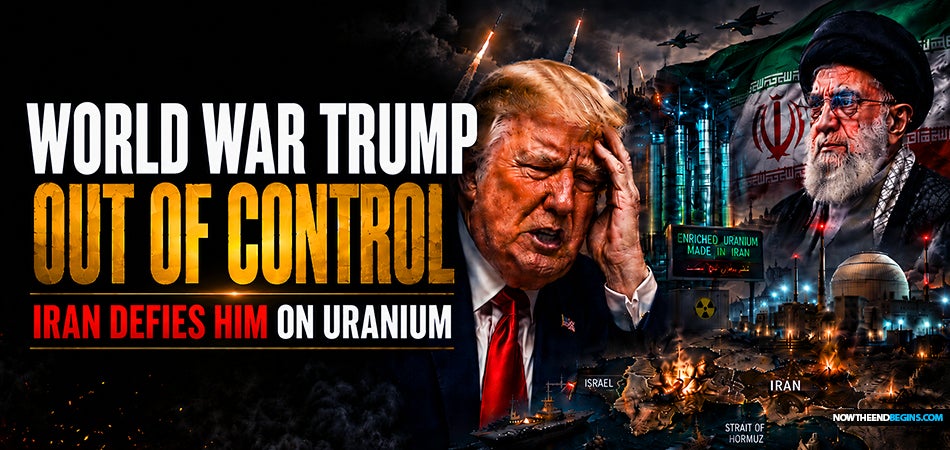
World War Trump Lit The Fuse In Iran But Tehran’s Defiant Refusal To Surrender Its Enriched Uranium Shows He Cannot Control The Coming Explosion
President Trump may have launched this war believing that overwhelming military force, diplomatic pressure, and Israeli coordination would bend Iran to Washington’s will. But today’s Reuters report shows something far more sobering. World War Trump, I’m sorry, Operation Epic Fury, has already moved beyond Trump’s control. As we have long told you, beneath the braggidocio and bluster from the Department of War, no one in the Trump administration seems to have any understanding at all of the Islamic mindset. Someone please tell the president that the only way this ends is with a ‘boots on the ground’ military intevention, and going in and taking the enriched uranium ourselves. That’s it, and Thank for your attention in this matter!
“Put not your trust in princes, nor in the son of man, in whom there is no help.” Psalm 146:3 (KJB)
Iran’s Supreme Leader has reportedly ordered that Iran’s enriched uranium must remain inside Iran, rejecting a central U.S. demand that the stockpile be removed from the country as part of any ceasefire or nuclear settlement. That is not negotiation, that is open defiance. Reuters reported the directive was confirmed by two senior Iranian officials, and markets immediately reacted, with oil spiking and U.S. stock futures falling on fears the conflict could escalate further. And there it is. Trump started the fire, but he certainly doesn’t own the flames. Trump can order strikes, and he can issue threats. He can stand behind podiums and announce ultimatums. He can say what Iran “must” do, what Israel “requires,” and what America “will not allow.” But the moment the missiles fly, the war becomes a living thing — fed by nationalism, religion, retaliation, oil markets, terror proxies, wounded pride, military calculations, and spiritual darkness. No president controls all of that, and now, it’s out of control.
This is the great delusion of modern American power: that Washington can bomb its way into obedience, threaten its way into peace, and sanction its way into surrender. But Iran is not responding like a defeated regime. Iran is responding like a regime that believes time, geography, fanaticism, and escalation are on its side. And you know what? It is. Trump demanded the uranium leave Iran,and Iran answered. They said “no”. That single word exposes the whole fantasy. Because if Trump cannot force Iran to surrender its enriched uranium after launching a war to stop Iran’s nuclear program, then what exactly has the war accomplished? If Iran keeps the stockpile, keeps the infrastructure hidden or hardened, keeps the ideology burning, and keeps the Strait of Hormuz hanging over the world economy like a sword, then Trump is not dictating the outcome — he is reacting to it.
Trump, Hegseth and the Department of War have consistiently lied to the American people about the true cost and toll of this war, and Congress must step in and hold them accountable
This war was sold as strength, but strength without control becomes chaos. Strength without a clean endgame becomes a trap. Strength without wisdom becomes exactly what the Bible says it is, the arm of flesh. Iran’s defiance also reveals how little leverage Trump truly has. If he escalates, oil prices can explode, American forces across the region become targets, Israel is pulled deeper into a widening war, and global markets start pricing in a Middle East firestorm. If he backs down, Iran claims victory and keeps the very uranium Washington demanded be removed. If he negotiates, Tehran stalls. If he bombs again, Tehran retaliates. Every door opens into another room of consequences.
The Supreme Leader is not merely defying Trump personally. He is defying the entire premise of the war. The premise was that force would compel Iran to give up the key nuclear leverage it has spent decades building. Instead, Iran is now publicly hardening its red line while the world watches Trump discover that starting a war is far easier than ending one. From a prophetic perspective, this is exactly the type of Middle East madness we have warned about for years. The kings and rulers of the earth imagine themselves to be moving the pieces, but the board is bigger than they are. Iran, Israel, America, oil, nuclear weapons, Islamic ideology, military alliances, and global panic are all converging in a region God has placed at the center of end-times events. Trump may have started the war, but as you can clearly see, he is absolutely not the author of it’s ending.
Mojtaba Khamenei Explodes At Trump’s Demand, Iran Refuses To Hand Over Nuclear Uranium
Now The End Begins is your front line defense against the rising tide of darkness in the last Days before the Rapture of the Church
- HOW TO DONATE: Click here to view our WayGiver Funding page
When you contribute to this fundraising effort, you are helping us to do what the Lord called us to do. The money you send in goes primarily to the overall daily operations of this site. When people ask for Bibles, we send them out at no charge. When people write in and say how much they would like gospel tracts but cannot afford them, we send them a box at no cost to them for either the tracts or the shipping, no matter where they are in the world. We have a Gospel Billboard program. We are now broadcasting Bible studies, Podcasts and a Sunday Service 5 times a week, thanks to your generous donations. All this is possible because YOU pray for us, YOU support us, and YOU give so we can continue growing.
But whatever you do, don’t do nothing. Time is short and we need your help right now. The Lord has given us an open door with a tremendous ‘course’ for us to fulfill that will create an excellent experience at the Judgement Seat of Christ. Please pray for our efforts, and if the Lord leads you to donate, be as generous as possible. The war is REAL, the battle HOT and the time is SHORT…TO THE FIGHT!!!
“Looking for that blessed hope, and the glorious appearing of the great God and our Saviour Jesus Christ;” Titus 2:13 (KJB)
“Thank you very much!” – Geoffrey, editor-in-chief, NTEB
Headline News
Iran Is Now Taunting United States Saying They’re ‘Just Getting Started’ In Stunning Exposé Of Just How Little Trump Understands Who He’s Actually At War With
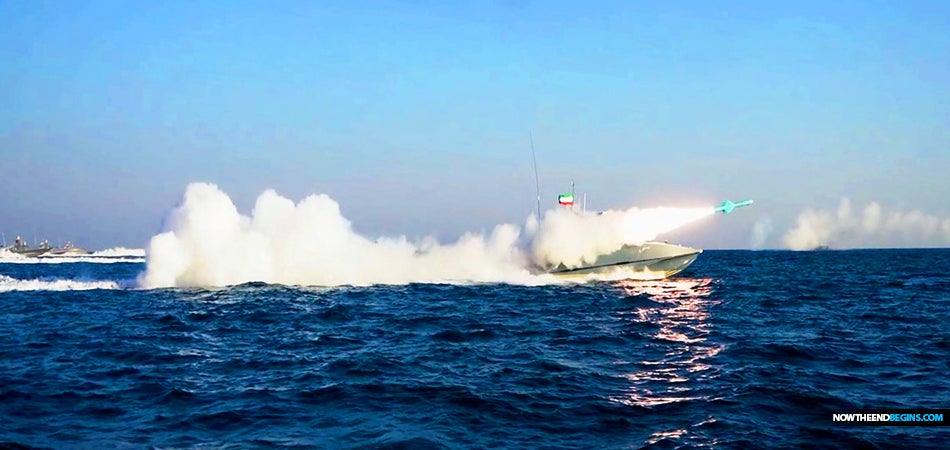
As Iran Says It Is ‘Just Getting Started,’ Trump’s Department Of War Faces A Religious Regime That Sees Conflict As Its Calling
Iran’s taunt that it is “just getting started” isn’t diplomatic theater or empty sabre-rattling, and it’s not merely the language of a cornered regime trying to save face. It is the language of a Shiite Islamic revolutionary state that has spent nearly half a century building itself around hatred for Israel, hostility to America, terror by proxy, and apocalyptic religious ambition. Washington keeps trying to interpret Iran through the sterile lens of sanctions, ceasefires, oil routes, naval corridors and negotiating tables, while Tehran is telling the world plainly who they are and what they intend to do. The Iranian Regime is more than happy to die for their cause, and until Trump and Hegseth realize that, things will continue to go from bad to worse as they are right now.
“And he will be a wild man; his hand will be against every man, and every man’s hand against him; and he shall dwell in the presence of all his brethren.” Genesis 16:12 (KJB)
The current crisis over the Strait of Hormuz is exposing that blindness in real time. The U.S. is attempting to reopen the strait through “Project Freedom,” with Defense Secretary Pete Hegseth saying the mission is temporary and that other nations should eventually take over the burden of protecting commercial shipping. Meanwhile, Iran is warning that American interference in the waterway is a violation of the ceasefire and is threatening further escalation. That’s the problem. America is trying to dial down the heat, Iran is trying to turn it up. Iran is not “decimated” or “obliterated”, they are enjoying every minute of it. This is what Washington still does not understand. Iran does not see the Strait of Hormuz merely as a shipping lane. They see it as leverage over the world, a pressure point against the West, and a stage upon which they can demonstrate defiance against America and Israel. Reports say hundreds of vessels and thousands of sailors have been caught up in the crisis, with U.S. forces attempting to guide ships through or around threatened waters while Iranian officials continue to issue threats and challenge American authority in the Gulf.
The Trump administration may understand carrier groups, destroyers, sanctions packages and military briefings, but it has shown very little evidence that it understands the true nature of who we are fighting. Iran is not simply a “bad actor.” It is not merely a rogue state looking for a better deal. It is the head of a terror-sponsoring Islamic regime whose entire regional strategy is built around exporting revolution, surrounding Israel, exhausting the West, and using negotiations as breathing room between rounds of conflict.
Iran’s own statements make that plain. Just days ago, Iranian officials warned of a “long and painful” response if the United States renewed attacks, while restating claims over the Strait of Hormuz and complicating American efforts to reopen the waterway. That is not the tone of a regime looking to stand down. That is the tone of a regime probing for weakness, testing resolve, and watching to see whether America still has the stomach to finish what it starts.
Warmonger Pete saying that “Iran is trying to subjugate the world”. Huh?? I THOUGHT they were “decimated” and “obliterated”, so how are they still able to exert their will on the world? The Department of Lies is more like it. pic.twitter.com/WCZAAjgnMZ
— Now The End Begins (@NowTheEndBegins) May 5, 2026
And here is where Bible believers must see clearly what the Pentagon cannot. This is not just a military contest. This is spiritual darkness expressing itself through geopolitical power. Iran’s hatred of Israel is not incidental to the conflict, it is central to it. Their war is not merely against American ships or Western sanctions. Their fury is ultimately directed at the God of Abraham, Isaac and Jacob, and the land He gave by covenant promise.
“Behold, I will make Jerusalem a cup of trembling unto all the people round about, when they shall be in the siege both against Judah and against Jerusalem.” Zechariah 12:2 (KJB)
That is why this conflict cannot be understood by secular analysts alone. They will talk endlessly about oil prices, shipping lanes, ceasefire mechanisms, coalition management, naval escorts and diplomatic offramps. But the King James Bible tells you where all of this is heading. The nations are being drawn, step by step, back to the Middle East, back to Israel, back to Jerusalem, and ultimately back to the prophetic program God declared long before the think tanks and war rooms ever existed.
America wants a temporary mission. Iran wants a permanent confrontation.
The Department of War says it is trying to secure commercial passage. Iran says the strait belongs under its “new maritime regime.” The U.S. wants to lower the temperature. Iran says it is just getting started. That contrast tells you everything you need to know. The Trump administration had better learn quickly that Iran does not think like Brussels, does not negotiate like Ottawa, and does not retreat like a Western bureaucracy embarrassed by bad polling. Iran is a religious dictatorship with messianic ambition, martyrdom theology, terror proxies and a long memory. They are willing to bleed their own people, wreck their own economy, and wreak havoc with global shipping if they believe it advances their war against Israel and the West. Does anyone remember the Kamakaze pilots that attacked Pearl Harbor? Negotations and peace talks have no effect with people who think like that.
This is the true nature of the enemy. And until America understands that, every ceasefire will become a countdown clock, every negotiation will become a delay tactic, every shipping corridor will become a trap, and every Iranian warning will be dismissed as rhetoric right up until the missiles begin to fly. America has already paid a steep price since Trump started this war, and something tells me that that’s ‘just getting started’, too.
Now The End Begins is your front line defense against the rising tide of darkness in the last Days before the Rapture of the Church
- HOW TO DONATE: Click here to view our WayGiver Funding page
When you contribute to this fundraising effort, you are helping us to do what the Lord called us to do. The money you send in goes primarily to the overall daily operations of this site. When people ask for Bibles, we send them out at no charge. When people write in and say how much they would like gospel tracts but cannot afford them, we send them a box at no cost to them for either the tracts or the shipping, no matter where they are in the world. We have a Gospel Billboard program. We are now broadcasting Bible studies, Podcasts and a Sunday Service 5 times a week, thanks to your generous donations. All this is possible because YOU pray for us, YOU support us, and YOU give so we can continue growing.
But whatever you do, don’t do nothing. Time is short and we need your help right now. The Lord has given us an open door with a tremendous ‘course’ for us to fulfill that will create an excellent experience at the Judgement Seat of Christ. Please pray for our efforts, and if the Lord leads you to donate, be as generous as possible. The war is REAL, the battle HOT and the time is SHORT…TO THE FIGHT!!!
“Looking for that blessed hope, and the glorious appearing of the great God and our Saviour Jesus Christ;” Titus 2:13 (KJB)
“Thank you very much!” – Geoffrey, editor-in-chief, NTEB














































-

 George Soros10 years ago
Proof Of George Soros Nazi Past Finally Comes To Light With Discovery Of Forgotten Interview
-
Election 201610 years ago
DEAD POOL DIVA: Huma Abedin Kept Those Hillary Emails That The FBI Found In A Folder Marked ‘Life Insurance’
-
Election 201610 years ago
Crooked Hillary Campaign Used A Green Screen At Today’s Low Turnout Rally In Coconut Creek FL
-
George Soros10 years ago
SORE LOSER: George Soros Declares War On America As Violent MoveOn.Org Protests Fill The Streets
-
Donald Trump10 years ago
Donald Trump Will Be 70 Years, 7 Months And 7 Days Old On First Full Day In Office As President
-
Headline News10 years ago
If Hillary Is Not Guilty, Then Why Are Her Supporters Asking Obama To Pardon Her? Hmm…
-
Election 201610 years ago
WikiLeaks Shows George Soros Controlling Vote With 16 States Using SmartMatic Voting Machines
-
End Times10 years ago
False Teacher Beth Moore Endorses The Late Term Partial-Birth Abortion Candidate Crooked Hillary