Posts tagged Fukushima
Japan Rocked By New 7.4 Quake
Apr 7th
TOKYO – A magnitude-7.4 aftershock rattled Japan on Thursday night, knocking out power across a large swath of the northern part of the country nearly a month after the devastating earthquake and tsunami that flattened the northeastern coast.
Japan’s meteorological agency issued a tsunami warning but canceled it about 90 minutes later. Officials said power was out in all of three northern prefectures (states) and in parts of two others. There were no immediate reports of serious injuries or damage. The aftershock was the strongest since the March 11 megaquake and tsunami that killed some 25,000 people, tore apart hundreds of thousands of homes and caused an ongoing crisis at a nuclear power plant.
The operator of the tsunami-ravaged Fukushima Dai-ichi nuclear plant said there was no immediate sign of new problems caused by the aftershock, and Japan’s nuclear safety agency says workers there retreated to a quake-resistant shelter in the complex. None were injured. The crisis there started when the tsunami knocked out cooling systems. Workers have not been able to restore them. Thursday’s quake knocked out several power lines at the Onagawa nuclear power plant north of Sendai, which has been shut down since the tsunami. One remaining line was supplying power to the plant and radiation monitoring devices detected no abnormalities. The plant’s spent fuel pools briefly lost cooling capacity but an emergency diesel generator quickly kicked in.” source – Yahoo News
Dead Men Walking: Fukushima 50 Fully Expect To Die
Mar 31st
Workers at the disaster-stricken Fukushima nuclear plant in Japan say they expect to die from radiation sickness as a result of their efforts to bring the reactors under control, the mother of one of the men tells Fox News.
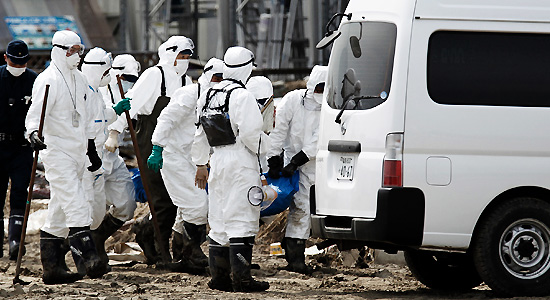
The so-called Fukushima 50, the team of brave plant workers struggling to prevent a meltdown to four reactors critically damaged by the March 11 earthquake and tsunami, are being repeatedly exposed to dangerously high radioactive levels as they attempt to bring vital cooling systems back online.
Speaking tearfully through an interpreter by phone, the mother of a 32-year-old worker said: “My son and his colleagues have discussed it at length and they have committed themselves to die if necessary to save the nation.
“He told me they have accepted they will all probably die from radiation sickness in the short term or cancer in the long-term.”
The woman spoke to Fox News on the condition of anonymity because, she said, plant workers had been asked by management not to communicate with the media or share details with family members in order to minimize public panic.” source – Fox News
Update: Japan Nuke Crisis Is Not Over
Mar 21st
Workers flee after smoke billows from two units; radiation taints vegetables, water
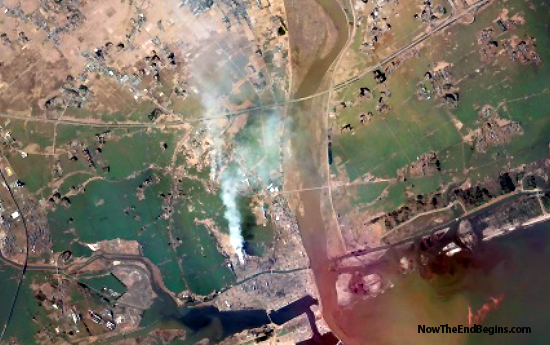
FUKUSHIMA, Japan — Gray smoke rose from two reactor units Monday, temporarily stalling critical work to reconnect power lines and restore cooling systems to stabilize Japan’s radiation-leaking nuclear complex.
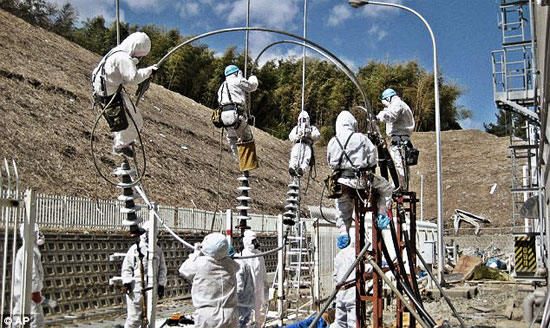
Workers are racing to bring the nuclear plant under control, but the process is proceeding in fits and starts, stalled by incidents like the smoke and by the need to work methodically to make sure wiring, pumps and other machinery can be safely switched on.
“Our crisis is still going on. Our crisis is with the nuclear plants. We are doing everything we can to bring this to an end,” Gov. Yuhei Sato of Fukushima prefecture, where the plant is located, told the more than 1,000 people moved away from the plant into a gymnasium. “Don’t give up. We know you are suffering.”
“Please get us out of here,” yelled Harunobu Suzuki, a 63-year-old truck driver.” source – MSNBC
US: Nothing To Stop Japan Nuke Meltdown
Mar 16th
Is a total meltdown inevitable
The chief of the U.S. Nuclear Regulatory Commission said Wednesday that all the water is gone from one of the spent fuel pools at Japan’s most troubled nuclear plant, but Japanese officials denied it.
If NRC Chairman Gregory Jaczko is correct, this would mean there’s nothing to stop the fuel rods from getting hotter and ultimately melting down. The outer shell of the rods could also ignite with enough force to propel the radioactive fuel inside over a wide area. Jaczko did not say Wednesday how the information was obtained, but the NRC and U.S. Department of Energy both have experts on site at the Fukushima Dai-ichi complex of six reactors. He said the spent fuel pool of the complex’s Unit 4 reactor has lost water.
Jaczko said officials believe radiation levels are extremely high, and that could affect workers’ ability to stop temperatures from escalating.
Japan’s nuclear safety agency and Tokyo Electric Power Co., which operates the complex, deny water is gone from the pool. Utility spokesman Hajime Motojuku said the “condition is stable” at Unit 4.” source – NPR
Japan Abandons Repair Work At Nuke Plants
Mar 15th
Game over
FUKUSHIMA, Japan – Japan suspended operations to keep its stricken nuclear plant from melting down Wednesday after surging radiation made it too dangerous to stay. Chief Cabinet Secretary Yukio Edano said the workers dousing the reactors in a frantic effort to cool them needed to withdraw.
“The workers cannot carry out even minimal work at the plant now,” Edano said. “Because of the radiation risk we are on standby.”
The nuclear crisis has triggered international alarm and partly overshadowed the human tragedy caused by Friday’s earthquake and tsunami, which pulverized Japan’s northeastern coastline, killing an estimated 10,000 people and severely damaging the nuclear plant.
Since then, authorities have tried frantically to avert an environmental catastrophe at the Fukushima Dai-ichi complex in northeastern Japan, 140 miles (220 kilometers) north of Tokyo.
Edano said the government expects to ask the U.S. military for help. He did not elaborate. He said the government is still considering whether and how to take up the various offers of help from other countries.
The surge in radiation was apparently the result of a Tuesday fire in the complex’s Unit 4 reactor, according to officials with Japan’s nuclear safety agency. That blast is thought to have damaged the reactor’s suppression chamber, a water-filled pipe outside the nuclear core that is part of the emergency cooling system. Officials had originally planned use helicopters and fire trucks to spray water in a desperate effort to prevent further radiation leaks and to cool down the reactors. ”It’s not so simple that everything will be resolved by pouring in water. We are trying to avoid creating other problems,” Edano said.” source – Yahoo News
Explosion Rocks Third Japanese Reactor
Mar 14th
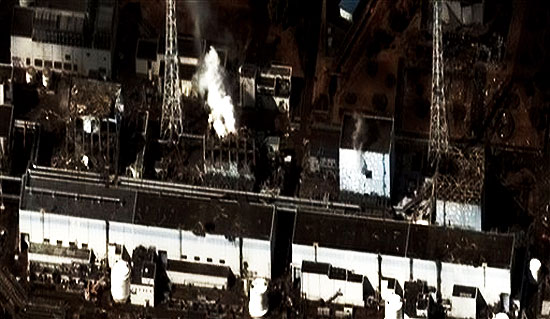
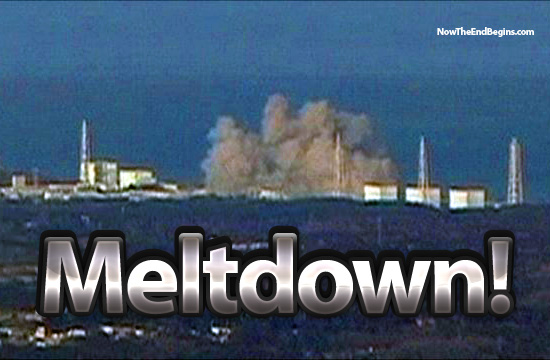
SOMA, Japan — A third explosion in four days rocked the earthquake-damaged Fukushima Dai-ichi nuclear plant in northeast Japan early Tuesday, the country’s nuclear safety agency said. Two sources told NBC News’ Robert Bazell that the latest blast breached the containment structure and that radiation has leaked out.
Chief government spokesman Yukio Edano told news agencies that the suppression pool appeared to be damaged. He said, however, that measuring devices in the area did not indicate an increase in radiation as a result of the damage. The suppression pool is used to turn steam back into water to cool the reactor and also plays a role in removing radioactive particles from the steam.
If confirmed, it would be the first direct damage to a reactor at the Fukushima Dai-ichi complex since the massive earthquake and tsunami on Friday.
The blast at Dai-ichi Unit 2 followed two hydrogen explosions at the plant — the latest on Monday — as authorities struggled to prevent the catastrophic release of radiation in the area devastated by a tsunami.” source – MNSBC
New Danger As Japan’s Reactor No.3 Fails
Mar 12th
Nuclear dangers rise
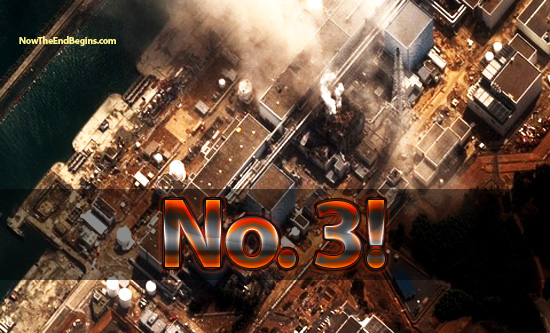
(Reuters) – A quake-hit Japanese nuclear plant reeling from an explosion at one of its reactors has also lost its emergency cooling system at another reactor, Japan’s nuclear power safety agency said on Sunday. The emergency cooling system is no longer functioning at the No.3 reactor at Tokyo Electric Power Co’s Fukushima Daiichi nuclear power facility, requiring the facility to urgently secure a means to supply water to the reactor, an official of the Japan Nuclear and Industrial Safety Agency told a news conference.
On Saturday, an explosion blew off the roof and upper walls of the building housing the facility’s No. 1 reactor, stirring alarm over a possible major radiation release, although the government later said the explosion had not affected the reactor’s core vessel and that only a small amount of radiation had been released.
The nuclear safety agency official said there was a possibility that at least nine individuals had been exposed to radiation, according to information gathered from municipal governments and other sources. source – Reuters