Posts tagged Economy
Obama Pitches Jobs Bill at North Carolina Firm That Ships Jobs to Costa Rica
Sep 15th
And the walls came tumblin’ down
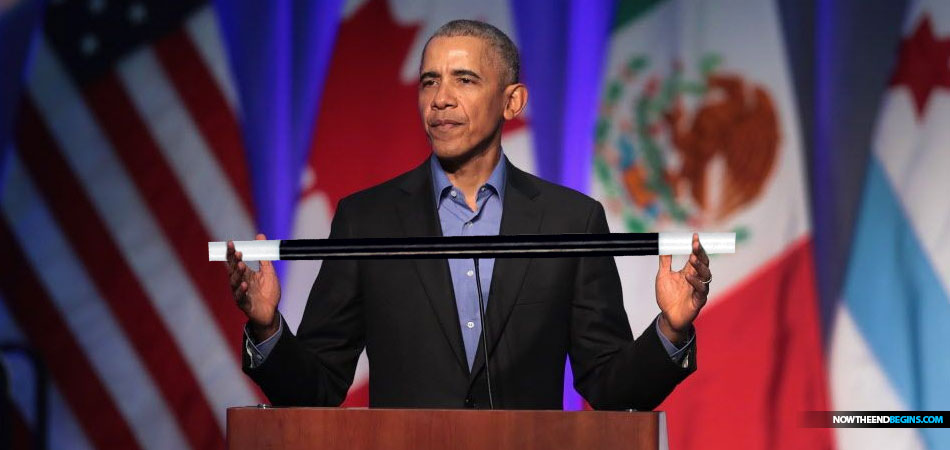
WASHINGTON — President Obama’s latest stop on his jobs bill tour Wednesday was a machine company in North Carolina that has sent jobs to Costa Rica.
After touring the facility of WestStar Precision, Obama said in a speech at North Carolina State University that the small business — headquartered in Apex, N.C., a Raleigh suburb — would benefit from the $450 billion jobs plan — which relies heavily on tax hikes on upper income earners — he’s been pressing Congress to pass right away.
“What they do is what a lot of companies in the Research Triangle do so well,” he said. “They hire smart people; they give them the best technology; they create something of lasting value.”
“And that’s how this country built a strong and growing economy and a strong expanding middle class. That’s our history. That’s what we got to get back to,” Obama said to roaring applause.
The company makes specialized components for the aerospace, medical and alternative energy industries, according to its website. The North Carolina office is about 11,000 square feet and reportedly employs 25 workers. The facility in Costa Rica is nearly as big at about 10,000 square feet. The company’s website says the Costa Rica facility is “designed for high volume production to support our international and domestic clients.”
WestStar was founded in 1996 and says it has tripled its employment in North Carolina since 2000. The company started sending jobs to Costa Rica to capitalize on low labor costs, the News & Observer reported in 2004. The company’s owner, Erv Portman, has also reportedly donated $1,000 to Obama’s inauguration fund. Portman is the newest Democratic commissioner in Wake County. source – Fox News
Bernanke Gives Up On Economy, Proposes No New Steps
Aug 26th
Bernanke’s got nothing
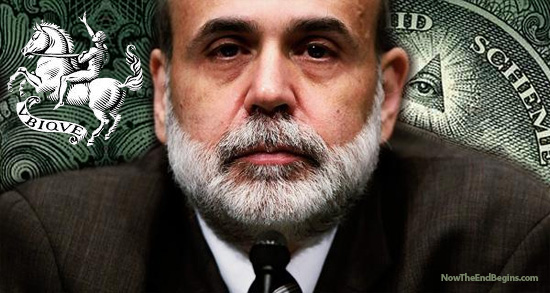
JACKSON HOLE, Wyo. (AP) — Federal Reserve Chairman Ben Bernanke signaled Friday that Congress must do more to promote growth, or risk delaying the economy’s return to full health.
Bernanke proposed no new steps by the Fed to boost the economy. But at a time when Congress has been focused on shrinking long-run budget deficits, he warned lawmakers not to “disregard the fragility of the current economic recovery.”
Bernanke, who spoke at an annual economic conference in Jackson Hole, said that record-low interest rates will promote growth over time.
His speech follows news that the economy grew at an annual rate of just 1 percent this spring and 0.7 percent for the first six months of the year. Only slightly healthier expansion is foreseen for the second half.
Bernanke said he’s optimistic that the job market and the economy will return to full health in the long run.
Stocks fell after the speech was released but then recovered. The Dow rose slightly in midmorning trading.
Bernanke left open the possibility that the Fed will take further steps to strengthen the economy. He said its September meeting will be held over two days instead of just one to allow for a “fuller discussion” and that the Fed “is prepared to employ its tools as appropriate to promote a stronger economic recovery.”
A plan Congress passed this month means annual deficits are expected to be reduced by $3.3 trillion over the next decade through spending cuts.
The Fed chairman said long-term deficit reduction is necessary. But he said that future economic health could be jeopardized if hiring and growth are not strengthened now.
Bernanke also was critical of Congress’ handling of this summer’s battle over raising the debt ceiling. He said it disrupted the economy and that a similar episode could hurt it in the future.
Analysts noted the lack of new proposals in Bernanke’s speech. source – YahooNews
Epic Fail – Obama’s Economists Admit Stimulus Has COST $278,000 per Job!
Jul 4th
Ugh.
When the Obama administration releases a report on the Friday before a long weekend, it’s clearly not trying to draw attention to the report’s contents. Sure enough, the “Seventh Quarterly Report” on the economic impact of the “stimulus,” released on Friday, July 1, provides further evidence that President Obama’s economic “stimulus” did very little, if anything, to stimulate the economy, and a whole lot to stimulate the debt.

People are starting to wonder if the massive damage that has occurred to our economy is from incompetence or by design. Hmmm...
The report was written by the White House’s Council of Economic Advisors, a group of three economists who were all handpicked by Obama, and it chronicles the alleged success of the “stimulus” in adding or saving jobs. The council reports that, using “mainstream estimates of economic multipliers for the effects of fiscal stimulus” (which it describes as a “natural way to estimate the effects of” the legislation), the “stimulus” has added or saved just under 2.4 million jobs — whether private or public — at a cost (to date) of $666 billion. That’s a cost to taxpayers of $278,000 per job.
In other words, the government could simply have cut a $100,000 check to everyone whose employment was allegedly made possible by the “stimulus,” and taxpayers would have come out $427 billion ahead.
Furthermore, the council reports that, as of two quarters ago, the “stimulus” had added or saved just under 2.7 million jobs — or 288,000 more than it has now. In other words, over the past six months, the economy would have added or saved more jobs without the “stimulus” than it has with it. In comparison to how things would otherwise have been, the “stimulus” has been working in reverse over the past six months, causing the economy to shed jobs. source – Weekly Standard
Obama Carrying Out George Bush’s 3rd Term Quite Nicely
May 3rd
Obama is living out Bush’s 3rd term
- Remember the ’08 campaign where Obama’s main attack against John McCain was “voting for McCain is a 3rd term for Bush”? Obama based his entire rhetoric on being everything that Bush was not, and how he was going to, once in office, undo all that Bush has done? Well, let’s take a quick peek and see how different life is under Obama compared to Bush policies and doctrine.
- Gitmo – Bush and Cheney were huge fans of continuing Guantanamo Bay – Gitmo – as the perfect off-shore holding area for captured terrorists. Obama decried it as unnecessary and inhumane, and swore that one of his very first orders of business would be to shut it down. Did he? No, he did not. Grade on this assignment: F
- Ending the wars – During the Bush years the main stream media maintained a perverse pride in making sure that a single Code Pink or Cindy Sheehan protest rally did not escape your notice either on the news, the net or in the papers. Obama promised to end the wars and bring our troops home. In reality, Obama has voted to fund and maintain both of “Bush’s wars”, as well as create a new “conflict” in Libya. Grade on this assignment: F
- Killing Bin Laden – Remember what Bush said about not caring if Bin Laden was caught “dead or alive”? It was George Bush who decreed that Osama Bin Laden was America’s #1 Enemy, and that all efforts to find and kill him should be undertaken. If the events of May 1 are to be believed, Osama Bin Laden was killed as decreed by Bush, on the orders of Obama. Grade on this assignment: A+
- Restoring the economy – The last 2 years of the Bush presidency, old George kind of lost his way. He forgot that Republicans are supposed to be financially conservative, and that borrowing your way out of debt never works. Obama promised that once he became President that he would reverse and “heal” the runaway spending of the Bush years. How did he do? Since taking office in 2008, not only has he continued all the failed borrow and spend policies of the Bush years, he has greatly added to our debt. In fact, debt under Obama now is greater than debt under all past US Presidents combined. Grade on this assignment: F
So there you have it, for better or for worse, it’s George Bush’s 3rd term to a “t”.
Hu calls currency system ‘product of the past’
Jan 16th
As we watch the decline of the American dollar, it is no surprise that China is making a move towards taking over as the nation to hold the world’s new reserve currency.
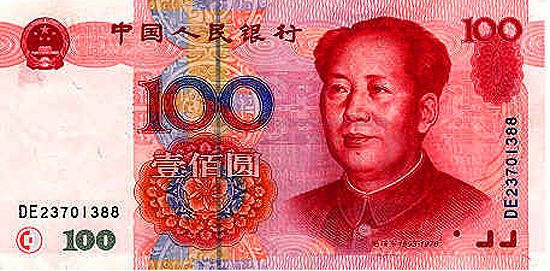
China’s President Hu Jintao said Sunday the international currency system was “a product of the past,” but it would be a long time before the yuan is accepted as an international currency.
Hu’s comments, which came ahead of a state visit to Washington on Wednesday, reflected the continuing tensions over the dollar’s role as the major reserve currency in the aftermath of the US financial crisis in 2008. source: AFP
In his remarks, President Hu Jintao did provide some assurance that the dollar would not be dumped immediately, but made it very clear that China has been a major contributor to the world economy and that the process of the yuan taking over the dollar is already moving ahead. He also voiced criticism of the Federal Reserve for trying to prop up the weakening dollar by dumping billions into the U.S. economy. The subject of international currency is expected to play a major role in talks during the Chinese President’s visit to Washington.
Number of the Week: Big Banks Gobble Up Market Share
Jan 16th
As America’s economy is still reeling from the effects of the recession due in part to the risky actions of the big banks on Wall Street, it is hard to believe that those very same banks are growing bigger than ever. The top five banks now own a whopping total of 13.3% of the entire financial firms’ assets in the United States, and this number keeps going up.
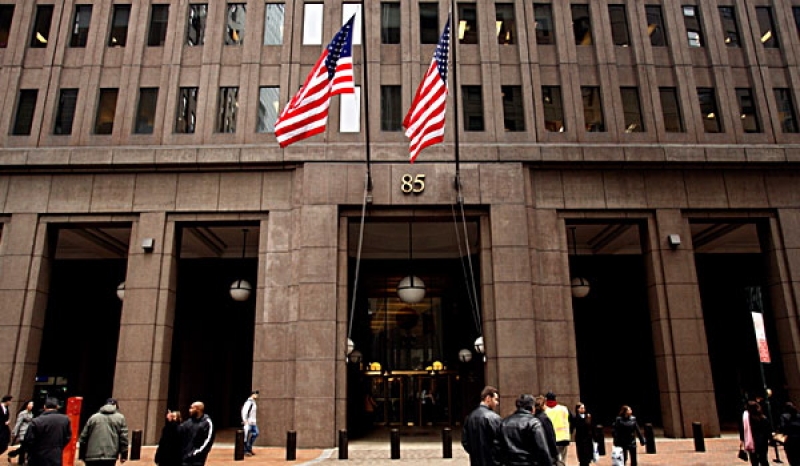
The top five U.S. commercial and investment banks — Bank of America, J.P. Morgan Chase, Citigroup, Wells Fargo and Goldman Sachs — have emerged from the financial crisis larger than ever. As of the third quarter of 2010, they had a total of $8.6 trillion in assets, according to data provider Capital IQ. That’s 13.3% of all U.S. financial firms’ assets, up from 11.8% three years earlier, when the financial crisis hit.
Size can be good, allowing banks to compete globally and provide services to customers at the lowest possible cost. But it also gives the top banks a lot of political influence. That could be a problem at a time when new financial-reform legislation has given U.S. regulators more leeway than ever in reshaping the rules by which the banks operate.
What seems forgotten is that banks’ increasing size, together with governments’ own parlous finances, could prevent taxpayers from bailing anyone out next time around. To be sure, tougher rules for big banks could push more risky activity into the shadows, creating another challenge for regulators. But unless we create a world in which banks can’t be too big to fail, we could soon come face to face with banks that are too big to save. source: The Wall Street Journal
What are we to expect for the future when these banks get a an even tighter grip on our financial system? They have the ability to buy off our politicians and create their own rules. This trend is not leading Americans toward more economic freedom, but is empowering the elites to make all the decisions and it seems, they are leading us deeper into a system in which the average citizen has no say so when it comes to how the economy is governed.