Islam
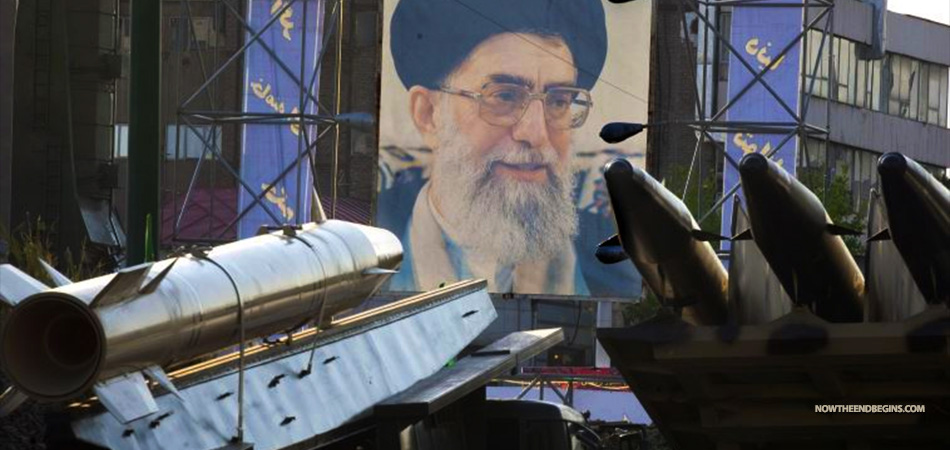
Oy Vey! Iran Begins Installing Advanced Centrifuges For Uranium Enrichment
Feb 22nd
The coming nuclear showdown
(Reuters) - Iran has begun installing advanced centrifuges at its main uranium enrichment plant, the U.N. nuclear watchdog said on Thursday, a defiant step that will worry Western powers ahead of a resumption of talks with Tehran next week.

You know how US President Obama is always telling people that “Iran must never become nuclear”? Ha, ha…good one!
In a confidential report, the International Atomic Energy Agency (IAEA) said 180 so-called IR-2m centrifuges and empty centrifuge casings had been put in place at the facility near the central town of Natanz. They were not yet operating.
If launched successfully, such machines could enable Iran to speed up significantly its accumulation of material that the West fears could be used to devise a nuclear weapon. Iran says it is refining uranium only for peaceful energy purposes.
Iran’s installation of new-generation centrifuges would be “yet another provocative step,” U.S. State Department spokeswoman Victoria Nuland said in Washington.
White House spokesman Jay Carney warned Iran that it would face further pressure and isolation if it fails to address international concerns about its nuclear program in the February 26 talks with world powers in the Kazakh city of Almaty.
Britain’s Foreign Office said the IAEA’s finding was of “serious concern”. Israeli Prime Minister Benjamin Netanyahu’s office said the report “proves that Iran continues to advance swiftly towards the red line” that he laid down last year.
Netanyahu, who has strongly hinted at possible military action if sanctions and diplomacy fail to halt Iran’s nuclear drive, told the U.N. in September that Iran should not have enough higher-enriched uranium to make even a single warhead.
Iran denies Western accusations that it is seeking to develop a capability to make atomic bombs. Tehran says it is Israel’s assumed nuclear arsenal that threatens peace.
The IAEA’s report showed “no evidence of diversion of material and nuclear activities towards military purposes,” Iranian envoy Ali Asghar Soltanieh told Iranian media.
U.S. lawmakers meanwhile are crafting a bill designed to stop the European Central Bank from handling business from the Iranian government, a U.S. congressional aide said on Thursday, in an attempt to keep Tehran from using euros to develop its nuclear program.
In the early stages of drafting, it would target the ECB’s cross-border payment system and impose U.S. economic penalties on entities that use the European Central Bank to do business with Iran’s government, the aide said on condition of anonymity.
The aide disclosed the new push for sanctions ahead of fresh talks on Tuesday in which major powers hope to persuade the Iranian government to rein in its atomic activities, which the West suspects may be a cover to develop a bomb capability.
RISING WESTERN PRESSURE
It was not clear how many of the new centrifuges Iran aims to install at Natanz, which is designed for tens of thousands. An IAEA note informing member states late last month about Iran’s plans implied that it could be up to 3,000 or so.
Iran has for years been trying to develop centrifuges more efficient than the erratic 1970s IR-1 model it now uses, but their introduction for full-scale production has been dogged by delays and technical hurdles, experts and diplomats say.
The deployment of the new centrifuges underlines Iran’s continued refusal to bow to Western pressure to curb its nuclear program, and may further complicate efforts to resolve the dispute diplomatically, without a spiral into Middle East war.
Iran has also started testing two new centrifuge types, the IR-6 and IR-6s, at a research and development facility, the IAEA report said. Centrifuges spin at supersonic speed to increase the ratio of the fissile isotope in uranium.
In a more encouraging sign for the powers, however, the IAEA report said Iran in December resumed converting some of its uranium refined to a fissile concentration of 20 percent to oxide powder for the production of reactor fuel.
That helped restrain the growth of Iran’s higher-grade uranium stockpile since the previous report in November, a development that could buy more time for diplomacy.
The report said Iran had increased to 167 kg (367 pounds) its stockpile of 20 percent uranium – a level it says it needs to make fuel for a Tehran research reactor but which also takes it much closer to weapons-grade material if processed further.
NEW OFFER TO IRAN
One diplomat familiar with the report said this represented a rise of about 18-19 kg since November, a notable slowdown from the previous three-month period when the stockpile jumped by nearly 50 percent after Iran halted conversion.
Israel last year gave a rough deadline of mid-2013 as the date by which Tehran could have enough higher-grade uranium to produce a single atomic bomb if processed further. Experts say about 240-250 kg of 20 percent enriched uranium would be needed.
But a resumption of conversion, experts say, means the Israeli “red line” for action could be postponed. Refined uranium can fuel nuclear energy plants, which is Iran’s stated aim, or provide the core of an atomic bomb, which the United States and Israel suspect may be its ultimate goal.
Next week’s talks between the six powers and Iran to try again to break the impasse in the decade-old dispute are their first since mid-2012 but analysts expect no real progress toward defusing suspicions that Iran is seeking atomic bomb capability.
The United States, Russia, China, France, Britain and Germany want Iran to halt 20 percent enrichment and shut the Fordow underground plant where this takes place. Iran wants them to recognize what it regards as its right to refine uranium for peaceful purpose and to relax increasingly strict sanctions battering its oil-dependent economy.
In Paris, French deputy foreign ministry spokesman Vincent Floreani said the powers were ready to make a new offer to Iran with “significant new elements” and that they hoped Tehran would engage seriously in the negotiations. source – Reuters
Cyprus Gives State Of Palestine Full Diplomatic Status
Feb 9th
State of Palestine
Cyprus has given the “state of Palestine” an embassy, even though it still says that a “Palestinian state” needs to be established through negotiations with Israel. AFP reported Cyprus said on Friday it has upgraded its relations with the Palestinian Authority to full diplomatic mission status, one of just eight European Union countries to do so.
The decision was announced by the Cypriot Foreign Minister Erato Kozakou-Marcoullis during an official visit by the Palestinian Authority’s Foreign Minister Riyad al-Malki.
“I informed my Palestinian counterpart of the decision of the government to upgrade the status of the Palestinian diplomatic representation in Cyprus from that of a Diplomatic Mission to that of an Embassy of the State of Palestine,” Marcoullis told reporters, according to AFP.
She said that this “important decision” was in line with the recognition of a Palestinian state in 1988 by Cyprus, and follows seven other EU members that have recognized a Palestinian State — Bulgaria, the Czech Republic, Hungary, Malta, Poland, Romania, and Slovakia.
A Cyprus Representation Office opened in Ramallah in 2009.
Malki said the decision sent a “very important message,” adding, “We hope this courageous step taken by Cyprus will be taken by others in the European Union.”
The PA’s ambassador to Nicosia, Walid Al-Hassan, told AFP, “Now we have diplomatic representation in Cyprus like any other country in the world. This applies to our legal situation and the immunity which accompanies diplomatic status.”
On November 29, Cyprus also voted in favor of PA Chairman Mahmoud Abbas’s bid for upgraded UN General Assembly status.
“All official correspondence will now be done in the name of the State of Palestine. Cyprus is the first European state to upgrade Palestinian status since the UN vote,” Hassan told AFP.
Marcoullis said Cyprus expressed “full support” for resolving aspirations for Palestinian statehood and sovereignty and those of Israel for security, through a comprehensive negotiated peace based on a two-state solution.
Nicosia backs an enhanced EU role in efforts for renewed and substantial peace efforts in 2013.
In the months that have passed since the UN vote, Abbas has taken several steps to officially name the areas he controls “the State of Palestine”. He first ordered all of the PA’s institutions to stop using the term ”Palestinian National Authority” on official documents and replace it with the term ‘the State of Palestine’.
Abbas then issued new guidelines ordering the PA government to re-issue passports,identity cards, registration documents, vehicle licenses, driver’s licenses, stamps and postmarks.
Abbas’s new guidelines dictate that a new emblem which reads “the State of Palestine” be placed on all re-issued documents. The PA’s Minister of Communication said last month that the first stamp to carry the name “State of Palestine” will be issued for the benefit of PA diplomatic officesabroad. source – Israel National News
Hey Obama, Iran Says They Are Fully Nuclear Right Now
Feb 6th
Iran is nuclear because Obama has allowed them to get there
Iranian president Mahmoud Ahmadinejad says that while Iran is already a nuclear state, it has no intention of attacking Israel. Ahmadinejad was interviewed on the eve of his visit to Cairo, where he will attend the 12th Islamic Summit Conference, due to open there on Wednesday.

Obama and Hillary promised up and down that they would “never allow Iran to become nuclear”. Haha….jokes on you, America.
Before his trip, he gave a long interview to the editor-in-chief of Egypt‘s newspaper Al-Ahram. Although Al-Ahram ran the entire interview only in its print edition, excerpts appeared on Egyptian websites.
Ahmadinejad said the world must now treat Iran as a nuclear country. “They want Iran to go back to what it was in the past, but they won’t succeed. They assume we’ll give in to pressure; such thoughts are misguided. We’re already an industrial and nuclear country, a country that has conquered space. For years we have been thinking about sending a human being into space, and we will do that, with Allah’s help. We must ensure development and growth and bring them to pass, and the world must acknowledge our progress,” he said, adding that the best solution was cooperation with Iran.
Mentioning the possibility of an Israeli attack on Iran, Ahmadinejad said that while it might be easy to launch missiles or attack using fighter jets, Iran’s response and defense capability were important in this context.
He reiterated that the Zionists were trying to take over the foci of power and wealth throughout the world. “They want to attack Iran, but we’re not preparing any attack against them because the purpose of our program is defense.”
During the interview, Ahmadinejad condemned what he described as massacres committed by Israel. “For us, supporting the Palestinian people is a matter of human importance in every sense. The Palestinians must receive their rights, and the Zionists are moving closer and closer toward the edge.”
He added that his country was opposed to any outside military intervention in Syria, saying that the solution to the crisis there was dialogue between all the Syrian groups. source – Haaretz
Muslim Suicide Bomber Kills 2 At US Embassy In Turkey
Feb 1st
ANKARA, Turkey (AP) — A suicide bomber detonated an explosive Friday in front of the U.S. Embassy in Ankara, killing himself and a guard at the entrance gate, officials said.
There was no immediate claim of responsibility, but Turkey’s interior minister, Muammer Guler, said the bomber was likely connected to a domestic left-wing militant group. He did not explain why.
The explosion occurred inside the security checkpoint at the side entrance to the U.S. embassy, which was being used by staff. A guard standing outside the checkpoint was killed and while the two other guards “were standing in a more protected area,” Guler said.
source – AP
Israel Signals To Syria That There Is More Coming
Feb 1st
BEIRUT (AP) — An Israeli air attack staged in Syria this week may be a sign of things to come.
Israeli military officials appear to have concluded that the risks of attacking Syria are worth taking when compared to the dangers of allowing sophisticated weapons to reach Hezbollah guerrillas in neighboring Lebanon.

This week’s airstrike targeted trucks containing Russian-made SA-17 anti-aircraft missiles, according to a U.S. official. The trucks were next to the military research facility identified by the Syrians, and the strike hit both the trucks and the facility, said the official, who spoke on condition of anonymity because he was not authorized to speak about the operation.
With Syrian President Bashar Assad’s grip on power weakening, Israeli officials fear he could soon lose control over his substantial arsenal of chemical and advanced weapons, which could slip into the hands of Hezbollah or other hostile groups. These concerns, combined with Hezbollah’s own domestic problems, mean further military action could be likely.
Tzachi Hanegbi, an incoming lawmaker in Prime Minister Benjamin Netanyahu’s Likud Party and a former chairman of parliament’s influential foreign affairs and defense committee, signaled Thursday that Israel could be compelled to act on its own. While Israel’s preference is for Western powers to gain control over Syria’s arms stockpile, he said there are no signs of that happening.
“Israel finds itself, like it has many times in the past, facing a dilemma that only it knows how to respond to. And it could well be that we will reach a stage where we will have to make decisions,” Hanegbi told Israel’s Army Radio Thursday. Hanegbi, like other Israeli officials, would not confirm Israeli involvement in the airstrike.
In this week’s incident, Israeli warplanes conducted a rare airstrike inside Syria, according to U.S. officials who said the target was a convoy carrying anti-aircraft weapons bound for Hezbollah, the powerful Lebanese militant group allied with Syria and Iran.
The Syrian military has denied the existence of any weapons shipment and said a military research facility outside Damascus was hit.
On Thursday, Syria threatened to retaliate, while Hezbollah condemned the attack as “barbaric aggression.” Iran, which supplies arms to Syria, Hezbollah and the Hamas militant group in Gaza, said the airstrike would have significant implications for Israel. Syrian ally Russia said it appeared to be an unprovoked attack on a sovereign nation.
Syria’s ambassador to Lebanon, Ali Abdul-Karim Ali, said Damascus “has the option and the capacity to surprise in retaliation.” He told Hezbollah’s al-Ahd news website that it was up to the relevant authorities to choose the time and place.
For now, Israeli officials seem to be playing down the threats
“Israel took a big gamble out of the belief that Iran and Hezbollah won’t retaliate. The question is, `Are they right or not?’” said Moshe Maoz, a professor emeritus at Hebrew University who specializes in Syria.
Officials believe that Assad’s position in Syria is so precarious that he cannot risk opening a new front with Israel. With an estimated 60,000 Syrians killed in the civil war, Israeli officials also think it’s too late for Assad to rally his bitterly divided nation behind him.
“Syria is in such a bad state right now that an Israeli retaliation to a Syrian action would be harsh and could topple the regime. Therefore Syria is not responding,” Maoz said.
Israel is far more worried about the threat of sophisticated weapons reaching Hezbollah. In a monthlong 2006 war, Hezbollah fired some 4,000 rockets and missiles into Israel before the conflict ended in a stalemate. Israeli officials believe the guerrilla group has restocked its arsenal with tens of thousands of missiles, some capable of striking deep inside the Jewish state.
Resigned to this fact, Israel has set a number of “red lines” for Hezbollah that it says are unacceptable, in particular the acquisition of new weapons that it believes would change the balance of power in the region. These include chemical weapons and sophisticated anti-aircraft and surface-to-sea missiles.
If the SA-17s were to have reached Hezbollah, they would have greatly inhibited the Israeli air force’s ability to operate in Lebanon. Israel has frequently flown sorties over Lebanese skies since 2006.
The airstrike is part of an Israeli strategy known to military planners as “the policy of prevention,” or the “war between wars.” In recent years, Israel is believed to have launched a number of covert missions, including airstrikes in Sudan and assassinations of key Hezbollah and Hamas militants, aimed at disrupting the flow of weapons to its Iranian-backed enemies. Israel has never acknowledged involvement.
Israeli security officials believe that Hezbollah, despite its claims of victory, is still deterred by the experience of the 2006 war, in which it lost hundreds of fighters. Instead of a direct war, Israel fears Hezbollah might try to strike Israeli or Jewish targets around the world. Israel has accused Hezbollah of a string of attacks on Israeli targets in recent years, including a deadly attack on Israeli tourists in Bulgaria last July.
The Israeli airstrike comes at a particularly sensitive and vulnerable time for Hezbollah in Lebanon. Despite its formidable weapons arsenal and political clout in the country, the group’s credibility and maneuvering space has been significantly reduced in the past few years.
Hezbollah still suffers from the fallout of the 2006 war, which many in Lebanon accused it of provoking by kidnapping soldiers from the border area. Since then, the group has come under increasing pressure at home to disarm, leading to sectarian tensions between its Shiite supporters and Sunnis from the opposing camp that have often spilled into deadly street fighting.
When Hezbollah sent an Iranian-made reconnaissance drone over Israel in November, the group boasted of its capabilities – but critics in Lebanon slammed it for embarking on a unilateral adventure that could provoke Israel.
Despite persistent reports and accusations that Hezbollah members are fighting alongside the military in Syria, Hezbollah has largely approached the Syria conflict with caution, mindful that any action it takes could backfire.
“In different times, Hezbollah would have reacted to Israel’s surgical strike, but not today,” said Bilal Saab, director of the Institute for Near East and Gulf Military Analysis, North America. “This is a time for hunkering down and weathering the storm.”
The uprising in Syria, the main transit point of weapons brought from Iran to Hezbollah, presents the group with its toughest challenge since its inception in 1982.
The group could still get weapons, but would struggle to get them as easily without the Syria supply route. Hezbollah leader Sheik Hassan Nasrallah’s public support for the Assad regime has proved costly and the group’s reputation has taken a severe beating. Former champions of the group now describe it as hypocritical for supporting Arab Spring uprisings in Tunisia, Libya and Egypt, but not in Syria.
As for Israel and Syria, although they are bitter enemies, they have avoided direct conflict for most of the past 40 years. Israel has been careful to stay out of Syria’s civil war, not wanting to be seen as supporting any side in the conflict.
While the attack overnight Tuesday, believed to be the first by Israel on Syrian soil since 2007, appeared to come out of nowhere, signs of impending action were evident in recent days. On Jan. 23, the day after national elections, Netanyahu convened top security officials for an emergency meeting to discuss the situation in Syria.
One of the meeting participants, Vice Premier Silvan Shalom, warned this week that Israel could be forced to carry out a pre-emptive attack under certain circumstances. The same day, Israel suddenly moved a new, state-of-the-art rocket-defense system to the northern city of Haifa, which was hit hard by Hezbollah rocket fire during a 2006 war.
Uzi Rabi, a military analyst at Tel Aviv University’s Dayan Center, said the attack was a “kind of message” sent by Israel to Syria and Hezbollah.
“It says we do have capabilities when it comes to intelligence gathering … and this would serve as kind of a warning sign to Hezbollah not to transfer chemical weaponry from Syria to Hezbollah,” he said. source – AP
Iran Threatens To Attack Israel Over Syria Bombing
Jan 31st
In wake of reported IAF attack on a military research center in Syria, Syrian ambassador to Lebanon says Damascus has option to respond as Iran threatens “serious consequences” for Tel Aviv; Hezbollah, Russia condemn strike.
BEIRUT – Syria’s ambassador to Lebanon said on Thursday that Damascus had the option of a “surprise decision” to respond to what it said was an Israeli air strike on a research center on the outskirts of the Syrian capital on Wednesday.
Syria could take “a surprise decision to respond to the aggression of the Israeli warplanes,” Ali Abdul Karim Ali was quoted as telling a Hezbollah-run news website.
In the wake of reported Israeli air strike on a Syrian weapons center, Iran also issued a threat to Israel on Thursday.
The Iranian regime’s English language mouthpiece, Press TV, quoted a deputy foreign minister as saying that the “strike on Syria will have serious consequences for Tel Aviv.” The official did not elaborate. source – JPost
Israeli Forces Strike Syria-Lebanon Border
Jan 30th
“Target was truckload of weapons, going from Syria to Lebanon,” says diplomat, adding that cache likely not chemical weapons.
Israeli forces attacked a convoy on the Syrian-Lebanese border on Wednesday, sources told Reuters, after Israelis warned their Lebanese enemy Hezbollah against using chaos in Syria to acquire anti-aircraft missiles or chemical weapons. source – JPost